Primary packaging
Liquid, paste, powder and granule filling with closure and sealing operations selected for the application.

Packaging machinery experience
More than 40 years of packaging machinery experience applied to filling, capping, labelling, conveying and complete automatic-line projects.
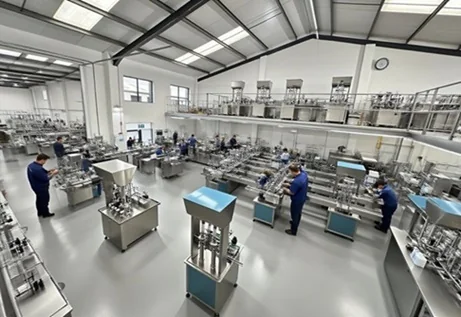
Application-led machinery
Lancing Ltd works with manufacturers and packers that need to fill, close, label, code, convey and pack products more consistently. Projects can begin with a single constrained operation, a replacement machine or a complete new automatic packaging line.
The line approach starts with the product and pack. Container geometry, closure behaviour, label presentation, required output, changeover pattern, cleaning and the site layout are translated into a machinery and integration scope.
Whether you need a compact line, a higher-throughput system or a carefully planned upgrade, the objective is the same: dependable production, sensible changeovers and support that continues after installation.
Scope
Liquid, paste, powder and granule filling with closure and sealing operations selected for the application.
Labelling, coding and inspection integrated with the handling needed for repeatable results.
Rinsing, feeding, conveying, accumulation and transfers developed around the real container.
Specification, integration, installation, commissioning, spares, service and format development.
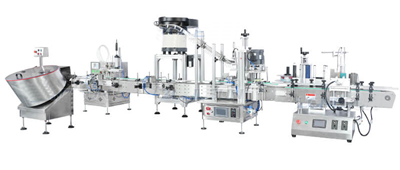
Working principles
Start with your product and production goal
Share the product, pack format, target speed and site details. The team can help identify the right automatic-line route and next technical steps.
Straight answers
Lancing Ltd is based at Unit 5A Jefferson Way, Thame, Oxfordshire, OX9 3SZ.
Lancing has more than 40 years of experience with semi-automatic and fully automatic packaging machinery.
Yes. Lancing supplies and supports equipment across filling, capping, labelling, conveying, rinsing, feeding, sealing, coding and complete automatic-line projects.
Call 01494 623015 or email sales@lancinguk.com with product, pack and project information.
How Lancing approaches automatic-line projects
Automatic-line projects involve more than selecting machinery. Lancing starts by establishing the product and pack duty, the intended production result, the existing site conditions and the responsibilities around each machine interface.
Where evidence is not yet available, the next step is to identify the trial, survey or sample review needed before a firm commitment is made. This keeps the discussion practical and avoids unsupported performance assumptions.
| Project question | Evidence to provide | How it is used |
|---|---|---|
| What must be packed? | Product data and representative production samples | To select suitable product-contact, filling and handling principles |
| What must the line handle? | Containers, closures, labels, cases and drawings | To assess feeding, transfers, change parts and quality checks |
| What result is needed? | Good-output target, shift pattern and batch profile | To balance modules and identify where buffers or labour are required |
| How will it be accepted? | Agreed formats, run conditions and measurable criteria | To plan factory testing, site commissioning and handover evidence |
Project check
A stronger brief gives clearer inclusions, exclusions, interfaces and assumptions.
Project check
Representative materials and agreed criteria reduce uncertainty during commissioning.
Project check
Settings, spares, service information and operator training form part of a maintainable production route.
Use the related pages to turn this guidance into a clearer scope and a more useful technical discussion.