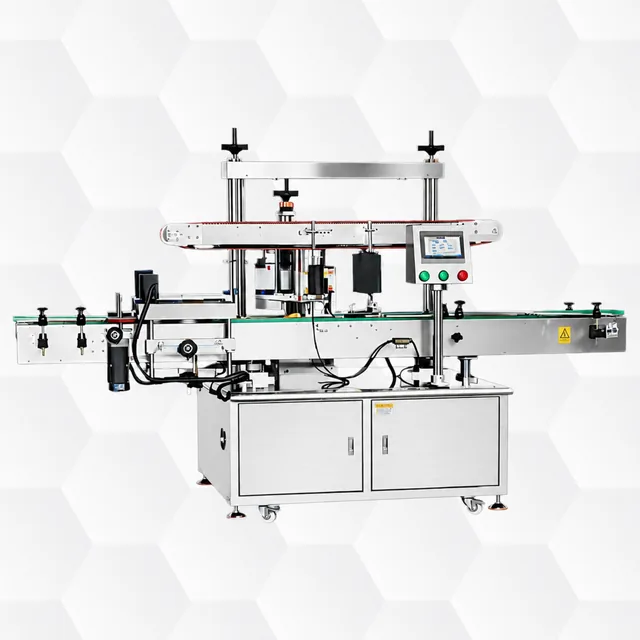
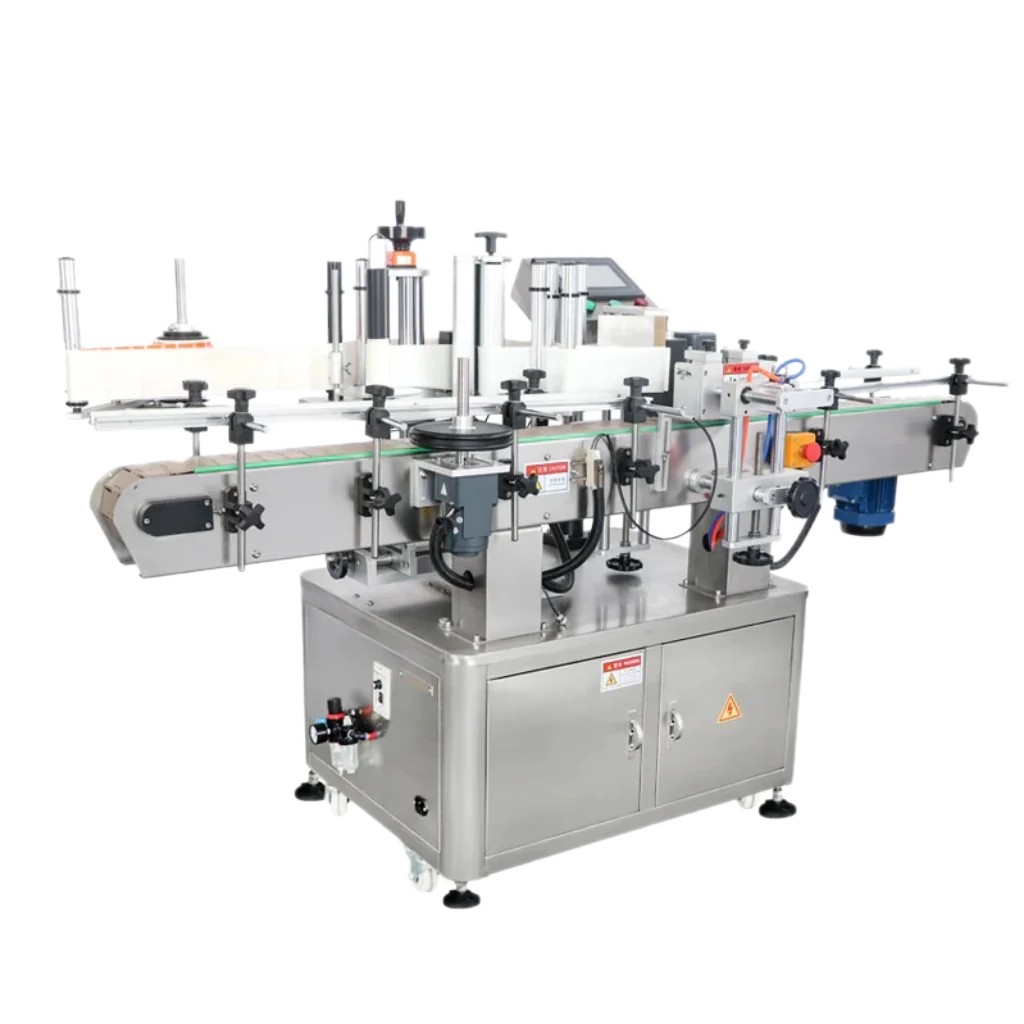
Wrap-around labels
Apply pressure-sensitive labels to round containers with controlled rotation and overlap.

Pack presentation and traceability
Stabilise, orient and space each pack so the chosen label or sleeve can be applied accurately at the required production rate.
Your production requirement
Round, oval, rectangular and irregular containers each need a suitable method of transport and stabilisation. Label stock, release characteristics, surface condition and required position then determine the applicator and control arrangement.
A labeller must also receive packs consistently from upstream operations. Spacing, back pressure, wet containers, loose caps or orientation features can affect label accuracy and finished presentation.
Line architecture
The application method is selected against container geometry, label design and the required inspection standard.
Apply pressure-sensitive labels to round containers with controlled rotation and overlap.
Stabilise shaped packs and place separate labels on defined faces.
Apply labels to cartons, lids, pouches or other stable flat surfaces.
Integrate sleeve application or variable-data labels with the correct handling and coding route.
Specification checklist
Container surface, label construction and environmental conditions all affect the result.
Your project route
Tell us the product, pack formats, output target, shifts, site constraints and future plans.
We review representative product, containers, closures and labels so recommendations are based on real production materials.
You receive a coordinated line concept covering machinery, transfers, controls, guarding, access, utilities and changeovers.
We support installation, integrated testing, settings, operator training and production handover against the agreed scope.
You can plan servicing, critical spares, new formats and future improvements around production risk.
Operational value
Container handling is matched to geometry and label position.
Fixed or variable information can be placed and verified in the right sequence.
Adjustment points, recipes and change parts reflect the agreed pack range.
Start with your product and production goal
Tell us what you pack, the container and closure, your target output and the space available. We will help you identify the right line sequence and level of automation.
Straight answers
Some configurations can cover several shapes, but the container range, label positions and speed determine whether one machine is practical.
Yes. Coding can be applied to the label or pack, with the location and data handling defined as part of the line scope.
Variable pack spacing, unstable containers, taper, moisture, unsuitable label stock, incorrect setup and upstream back pressure can all contribute.
Yes. Vision or barcode systems can check agreed attributes where the label, print and pack presentation allow reliable inspection.
Next steps
Solution
Continue planning with this related automatic-line resource.
View bottle packaging linesModule
Continue planning with this related automatic-line resource.
View coding and sealing systemsService
Continue planning with this related automatic-line resource.
View retrofits and upgradesLabel application as a controlled process
Label accuracy depends on more than the applicator. Container roundness, taper, seams, flexibility, surface energy, condensation, dust and the way the pack is held can affect placement and adhesion. The line should present the pack consistently before the label meets the surface.
The specification should identify the complete label construction, roll direction, core, web width, gap, adhesive, transparency, print area and any coding or inspection requirement. Representative production rolls are preferable to hand-made samples.
| Input | Define | Why it matters |
|---|---|---|
| Container | Shape, dimensions, taper, seam, flexibility and application zone | Pack stabilisation, sensors and applicator arrangement |
| Label roll | Material, adhesive, dimensions, pitch, core, winding and transparency | Web handling, detection, speed and change parts |
| Presentation standard | Position, skew, seam, bubbles, wrinkles and allowable variation | First-off approval and inspection method |
| Upstream condition | Moisture, dust, product contamination, spacing and orientation | Adhesion, pack cleaning and line timing |
Project check
Use guides, belts or fixtures appropriate to the actual pack stability.
Project check
Treat artwork version, batch information and recipe selection as one change process.
Project check
Adhesion and tracking can change with line rate, temperature and component variation.
Use the related pages to turn this guidance into a clearer scope and a more useful technical discussion.
Individual labelling-machine listings are maintained on Packaging Automation UK; this page focuses on automatic-line handling and presentation.
LABELLING LINE BUYER QUESTIONS
Label placement is influenced by the pack surface, label construction, product condition, conveyor control and inspection method. The following answers identify the format evidence needed before a labeller is integrated into a complete line.
Tapered, flexible, wet, dusty, cold or highly curved containers can make label application and adhesion more demanding. Recesses, seams, handle features and variable container presentation also affect placement. The line should be trialled with production containers and labels under representative temperature and surface conditions.
Label-placement performance depends on container repeatability, sensing, product control, label pitch, web tracking, applicator setup and the measurement method. A useful specification defines the reference feature, permitted variation, test speed and sample size. It should not rely on an isolated accuracy figure that ignores container and label tolerances.
Coding and inspection should be designed around the label web or applied pack, required data, trigger timing, readable area, reject logic and line tracking. The system must define what constitutes a failed code or label, which pack is affected and how rejection is confirmed. Coding, inspection and rejection should therefore be tested as one sequence.
Provide containers across the format range, final labels on the intended reel specification, label drawings, placement tolerances, coding content, target output and the condition of packs at the labeller. Include any orientation, wrap, front-and-back or inspection requirement and enough samples for application and adhesion trials.
Packaging Line Reject Management and Traceability explains the project decisions, evidence and responsibilities that should be resolved before the relevant line scope is accepted.