Liquid filling
Gravity, vacuum, volumetric, flowmeter or weighing approaches for different liquids and containers.

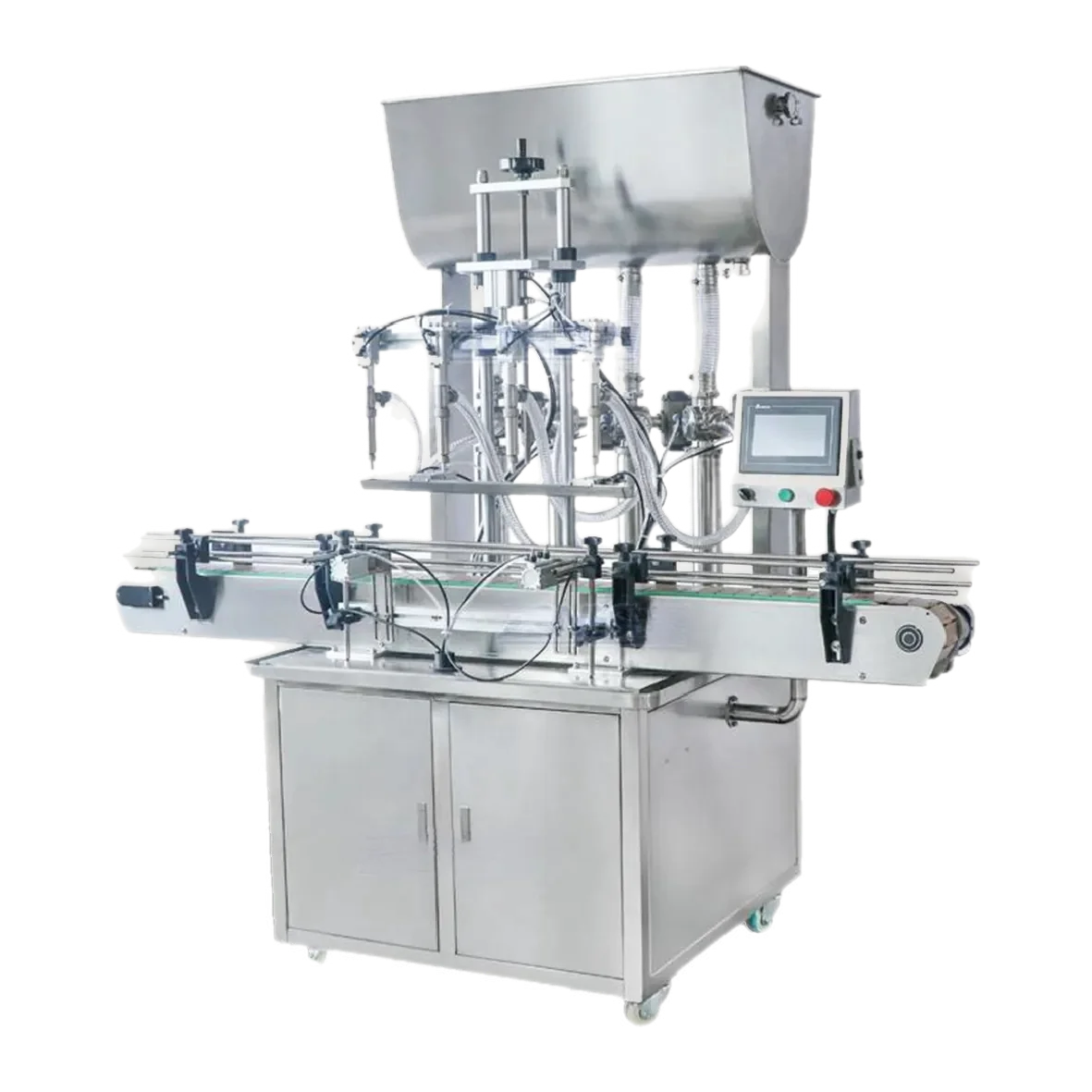
The dosing stage at the centre of the line
Select filling technology by product behaviour, dose, accuracy, hygiene and throughput, then integrate it with the container and closure process.
Your production requirement
A filling system is only suitable when its measuring principle, product-contact path and cycle match the application. The same nominal output can require very different equipment for water-like liquids, foaming products, creams, powders or granules.
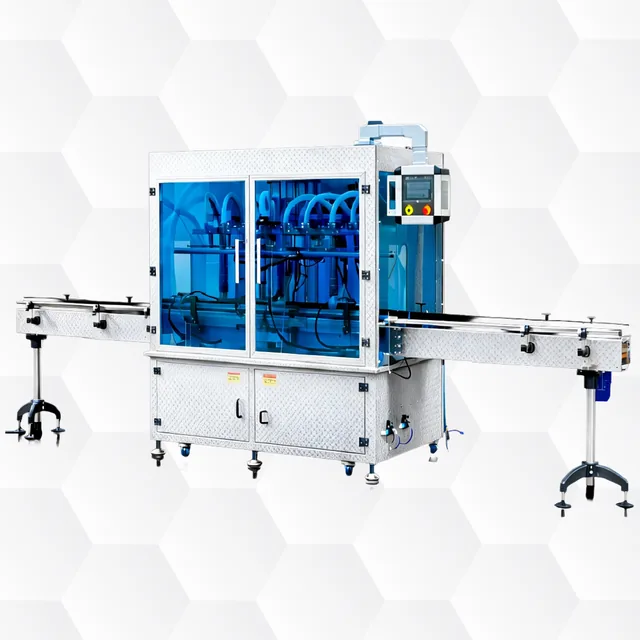
Integration then turns the filler into a production line. Container presentation, no-container-no-fill logic, upstream supply, downstream spacing and cleaning access all influence the final arrangement.
Line architecture
The shortlist is built around what must be measured and how the product can be moved safely and repeatably.
Gravity, vacuum, volumetric, flowmeter or weighing approaches for different liquids and containers.
Positive displacement and product-conditioning routes for creams, gels, sauces and other viscous products.
Auger, volumetric or weighing approaches for powders and granules with dust and feed controls.
Application-led options for carbonated, heated, hazardous-area or unusual container requirements.
Specification checklist
A specification should show the full operating range and the production conditions that affect it.
Your project route
Tell us the product, pack formats, output target, shifts, site constraints and future plans.
We review representative product, containers, closures and labels so recommendations are based on real production materials.
You receive a coordinated line concept covering machinery, transfers, controls, guarding, access, utilities and changeovers.
We support installation, integrated testing, settings, operator training and production handover against the agreed scope.
You can plan servicing, critical spares, new formats and future improvements around production risk.
Operational value
The dosing principle is selected against product behaviour and accuracy rather than generic machine labels.
Product-contact parts, access and cleaning routes are considered with the operating team.
Nozzle count and cycle are matched to container supply and downstream capacity.
Start with your product and production goal
Tell us what you pack, the container and closure, your target output and the space available. We will help you identify the right line sequence and level of automation.
Straight answers
Start with the product, dose range, accuracy, container, speed, cleaning and site requirements. These factors determine the suitable measuring and transfer principles.
No. Nozzle count should match the filling cycle, container handling, product supply and downstream line speed. More nozzles can add complexity without improving real output.
Many automatic systems can use stored settings for agreed products and formats, but the available controls depend on the selected equipment and project scope.
Yes. Filling can be integrated with rinsing, capping, sealing, labelling, coding, conveying and end-of-line equipment.
Next steps
Solution
Continue planning with this related automatic-line resource.
View liquid filling linesSolution
Continue planning with this related automatic-line resource.
View powder filling linesSolution
Continue planning with this related automatic-line resource.
View fill, cap and label linesFilling duty definition
Filling-machine selection begins with the product and process conditions. Viscosity, particulates, aeration, foaming, temperature, settling, bulk density and product-supply stability can all change the practical filling method and the behaviour seen at the nozzle.
The line brief should also define what a correctly filled pack looks like for the next stage. Drips, strings, dust, product on the neck, static or unstable fill level may affect closure application, sealing, coding and label presentation.
| Input | Record | Decision affected |
|---|---|---|
| Product condition | Temperature, viscosity or flow behaviour, particulates, aeration and hazards | Measurement principle, product path, agitation and nozzle design |
| Supply method | IBC, tank, hopper, pump, vacuum transfer or manual loading | Feed controls, level management and responsibility boundary |
| Fill duty | Minimum and maximum amount, container range and quality method | Dosing range, head count, change parts and verification |
| Post-fill condition | Drip, foam, dust, settling time and neck cleanliness | Conveyor dwell, extraction, cleaning and downstream timing |
Project check
Bench samples may not represent product temperature, air content or settling during a shift.
Project check
Agree how fill performance will be checked and which calibrated equipment or sampling plan is used.
Project check
Product supply must replenish the dosing system without starving it or changing product condition.
Use the related pages to turn this guidance into a clearer scope and a more useful technical discussion.
Individual filler listings and model-level specifications are maintained on Automation Machinery; this page covers the filling stage as part of an automatic line.