Bulk cap handling
Store and deliver closures at a controlled rate without damage or excessive operator intervention.

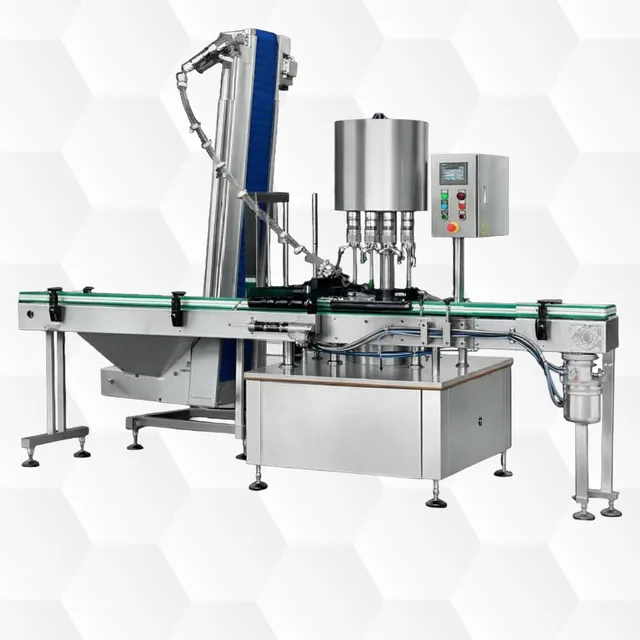
Closure feeding, placement and control
Integrate cap handling and application around the real closure, container finish, torque requirement, speed and format-change pattern.
Your production requirement
A reliable capping line needs a controlled supply of correctly oriented closures, stable containers and enough time to place and secure each cap. Cap variation, flexible bottles and neck contamination can all affect performance.
Screw caps, pumps, triggers, ROPP, crimp, crown, vacuum and other closures require different feeding and application methods. The capping system is therefore tested and specified around actual samples.
Line architecture
Feeding, presentation and application are engineered together rather than treated as separate purchases.
Store and deliver closures at a controlled rate without damage or excessive operator intervention.
Present caps, pumps or triggers in the correct attitude and maintain control to the pick-off point.
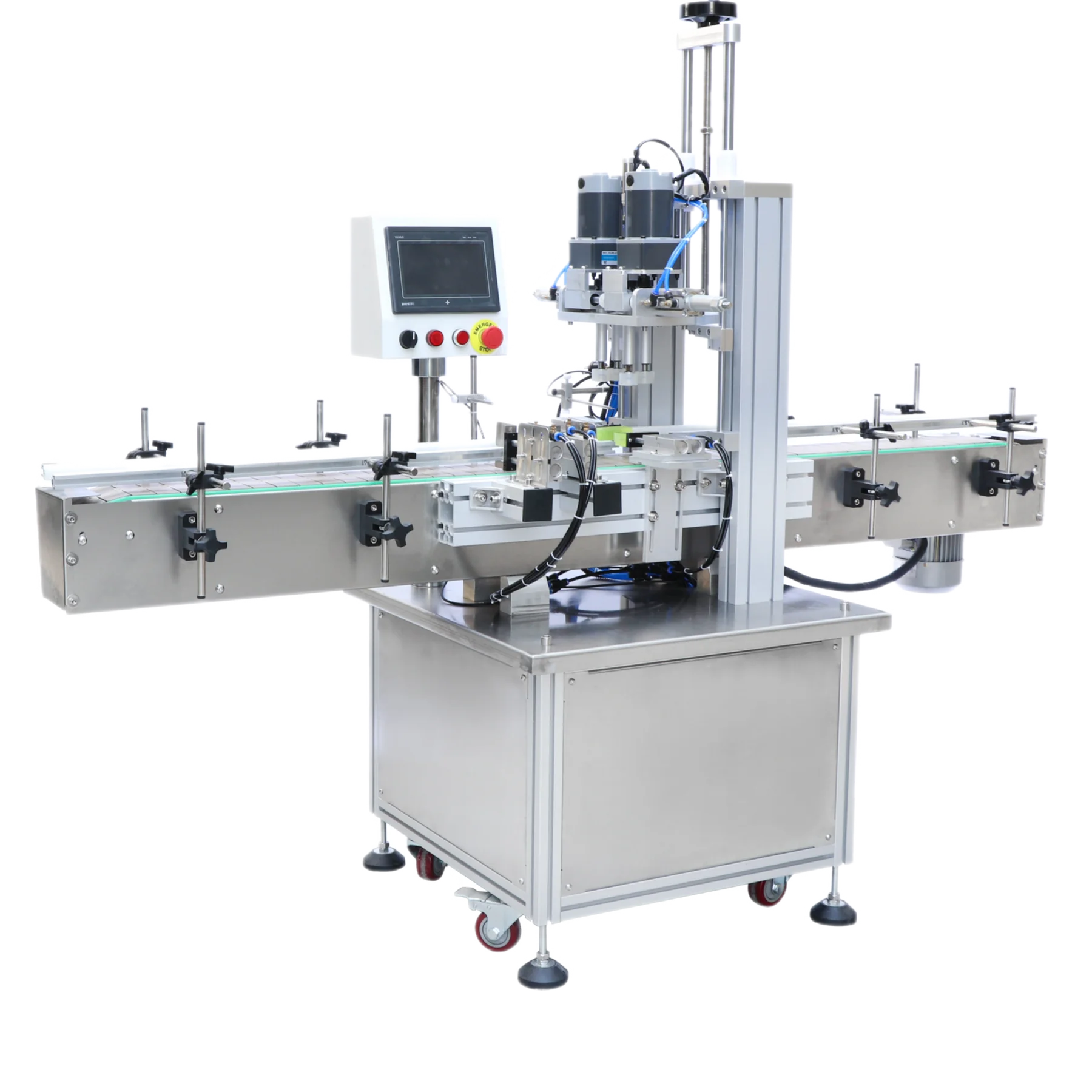
Apply the closure using spindle, chuck, press, crimp, ROPP or another suitable mechanism.
Check presence, height, torque proxy or other agreed attributes and manage non-conforming packs.
Specification checklist
Cap and bottle tolerances can materially influence the feeding and tightening method.
Your project route
Tell us the product, pack formats, output target, shifts, site constraints and future plans.
We review representative product, containers, closures and labels so recommendations are based on real production materials.
You receive a coordinated line concept covering machinery, transfers, controls, guarding, access, utilities and changeovers.
We support installation, integrated testing, settings, operator training and production handover against the agreed scope.
You can plan servicing, critical spares, new formats and future improvements around production risk.
Operational value
The feed route is matched to closure geometry and target output.
Bottle support and application force are considered for lightweight or flexible packs.
Presence and application verification can be included at the appropriate point.
Start with your product and production goal
Tell us what you pack, the container and closure, your target output and the space available. We will help you identify the right line sequence and level of automation.
Straight answers
Applications can include screw caps, pumps, triggers, ROPP, crimp, crown, press-on, vacuum and other specialist closures. Samples determine the appropriate route.
They can be, but their shape and dip tubes make feeding more complex than simple caps. The required speed, closure variation and loading method should be reviewed.
The method depends on the capping technology. Torque settings, chuck or spindle setup, container support and closure variation all contribute to the result.
Yes. Presence, height, skew and other checks can be integrated where the pack and quality plan support reliable inspection.
Next steps
Video
Continue planning with this related automatic-line resource.
Solution
Continue planning with this related automatic-line resource.
View fill, cap and label linesModule
Continue planning with this related automatic-line resource.
View conveying and accumulationClosure-system specification
A capping head cannot compensate for inconsistent closure presentation. The specification should cover the complete route from bulk loading through orientation, transfer, placement, application and confirmation, including the method used to contain or reject a failed pack.
Closure and neck-finish variation should be reviewed with production samples. Pumps, triggers, droppers and other assembled closures may introduce tube orientation, compression, priming or handling issues that are not visible from nominal dimensions alone.
| Stage | Information required | Engineering decision |
|---|---|---|
| Bulk handling | How closures arrive, batch quantity, dust or damage risk and refill method | Hopper, elevator, bowl, sorter or controlled manual presentation |
| Orientation | Geometry, centre of gravity, tamper features, tubes and acceptable contact surfaces | Sorting principle and transfer path |
| Application | Neck finish, closure type, application force or torque and container support | Chuck, spindle, press, crimp or specialist closing method |
| Verification | Presence, height, torque proxy, seal or tamper requirement and reject response | Sensor, inspection and reject confirmation logic |
Project check
Support bottles through cap placement and tightening without distortion or marking.
Project check
Place bulk loading where it is safe and practical without interrupting normal production.
Project check
Agree what is inspected, how failure is confirmed and where rejected packs are contained.
Use the related pages to turn this guidance into a clearer scope and a more useful technical discussion.
Individual capping-machine listings are kept on Packaging Automation UK; this page covers closure handling within an integrated line.
CAPPING LINE BUYER QUESTIONS
Cap application depends on the closure, container neck, product condition, cap presentation and the acceptance test used to define a correctly closed pack. These questions help separate closure feeding, placement and final tightening requirements.
The correct capping method depends on the closure geometry, thread or engagement, required orientation, tamper-evident features, container stability and the way acceptable closure is verified. Screw caps, press-on closures, pumps, triggers and specialist closures can need different feeders, placement heads and tightening methods. Samples from normal production batches are essential.
Cap torque should be specified as an agreed package requirement based on the container, closure, liner, product and downstream use, not as a generic machine claim. Application torque and removal torque are different measurements and can change with time and conditions. The customer should define the acceptance method and sampling plan with the relevant packaging suppliers.
Cross-threading or poor seating can result from cap orientation, unstable containers, damaged necks, closure variation, misalignment, excessive downward force, incorrect speed matching or product contamination. The complete sequence from feeding and pick-up to placement and tightening should be observed. Repeatedly increasing torque can hide the cause and damage the pack.
Supply containers and closures from representative production batches, including expected tolerance and any liners, seals, pumps or tamper features. Provide filled-container weight, product contamination risks, target output and the agreed closure-quality test. Enough samples are needed to assess feeding, placement, tightening and recovery from normal stops.