Accumulation and collation
Buffer finished packs and create the required count or pattern for wrapping or packing.

From finished pack to handled unit
Collate, wrap, case, seal and transfer finished products in a downstream process matched to pack quality, output and logistics requirements.
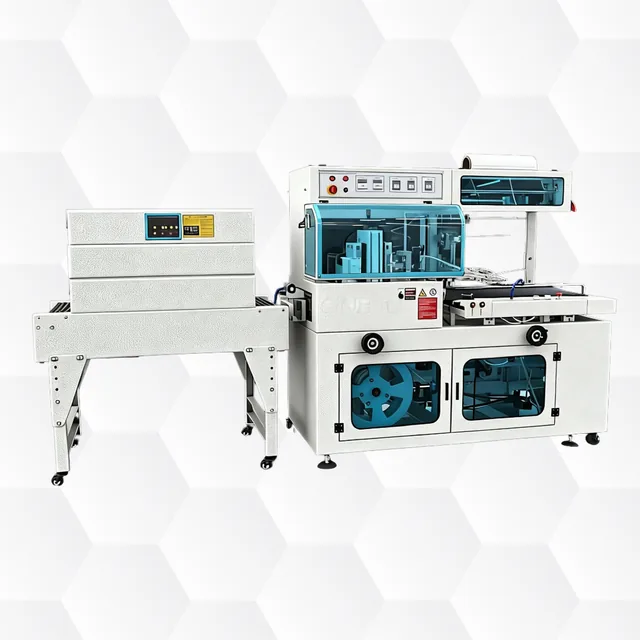
Your production requirement
Finished products still need to be accumulated, counted, grouped and protected for handling. The chosen end-of-line route affects labour, pack presentation, material use, available space and the ability to recover from upstream stops.
Shrink wrapping, case taping, carton handling, manual packing stations and transfer to palletising or warehouse systems can be combined at the level of automation justified by the production profile.
Line architecture
The sequence is based on the selling unit, transit format and how operators or logistics systems handle it.
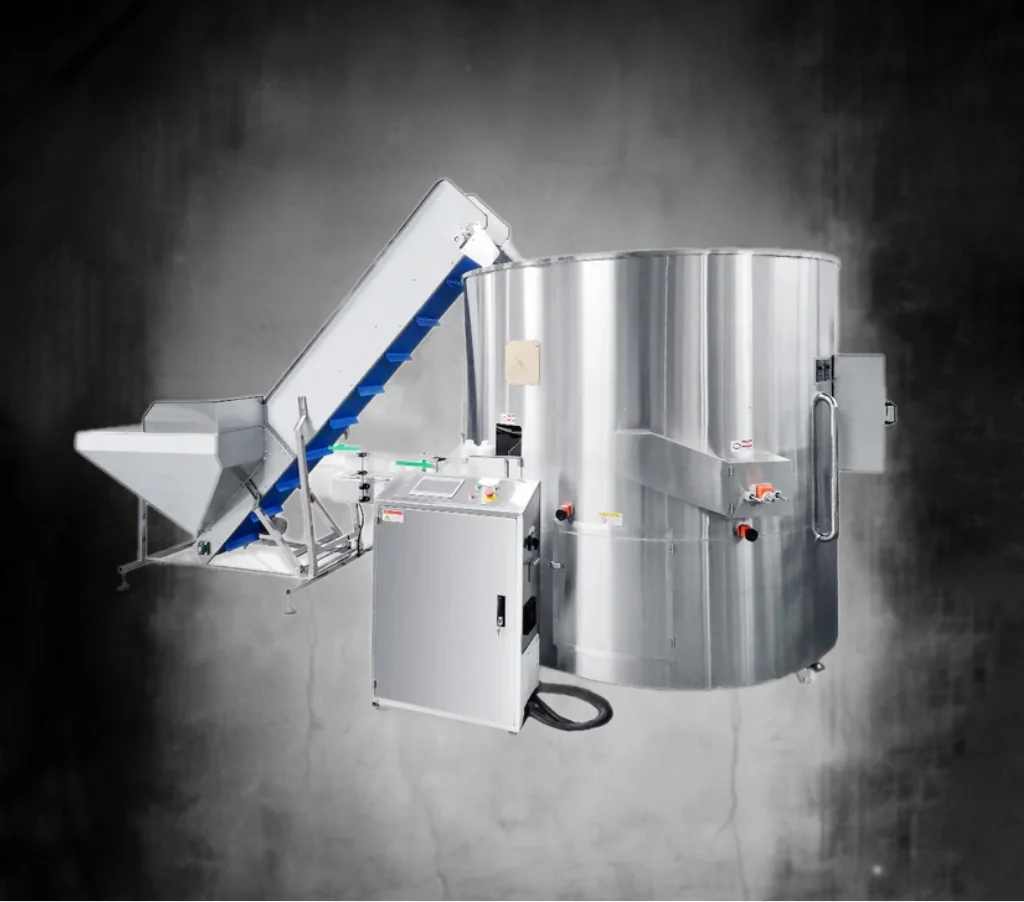
Buffer finished packs and create the required count or pattern for wrapping or packing.
Form and protect grouped packs using a suitable sealing and heat-shrink arrangement.
Erect, load, close or tape cases with the appropriate manual or automatic interfaces.
Transfer completed units toward palletising, warehousing or manual collection safely.
Specification checklist
Case, tray or bundle requirements determine how individual packs must be grouped and oriented.
Your project route
Tell us the product, pack formats, output target, shifts, site constraints and future plans.
We review representative product, containers, closures and labels so recommendations are based on real production materials.
You receive a coordinated line concept covering machinery, transfers, controls, guarding, access, utilities and changeovers.
We support installation, integrated testing, settings, operator training and production handover against the agreed scope.
You can plan servicing, critical spares, new formats and future improvements around production risk.
Operational value
Packing output is sized so it does not become the unplanned line constraint.
Automation is applied where collation, wrapping or closing tasks justify it.
The transport format is developed around pack presentation and logistics needs.
Start with your product and production goal
Tell us what you pack, the container and closure, your target output and the space available. We will help you identify the right line sequence and level of automation.
Straight answers
It can include accumulation, collation, shrink wrapping, cartoning, case packing, case sealing, coding and transfer toward palletising or dispatch.
It needs enough effective capacity for the incoming flow and grouping cycle, including recovery after short stops. The design depends on the complete line balance.
Yes. A well-designed manual station can be appropriate where pack variety or volume does not justify full automation.
Yes. Case coding, print-and-apply labelling and verification can be integrated into the downstream sequence.
Next steps
Module
Continue planning with this related automatic-line resource.
View conveying and accumulationSolution
Continue planning with this related automatic-line resource.
View high-volume packaging linesService
Continue planning with this related automatic-line resource.
View line integrationFinished-pack flow
End-of-line design should begin with the unit that leaves production: a loose bottle, collation, shrink bundle, tray, case or pallet-ready load. That decision determines the required orientation, grouping, buffer, case presentation and operator involvement after the primary pack is complete.
The downstream system must also accept the quality and rate of the upstream line. If finished packs need manual inspection, inserts, sampling or mixed case patterns, those tasks should be included in the production balance rather than treated as unlimited labour.
| Decision | Information required | Integration effect |
|---|---|---|
| Dispatch unit | Pack count, orientation, case or film format and closure method | Determines collation, wrapping, case forming and sealing stages |
| Upstream arrival | Rate, spacing, format mix and likely short stops | Determines metering and accumulation before packing |
| Manual tasks | Inspection, inserts, sampling, rework and pallet handling | Determines operator stations and realistic sustained output |
| Downstream handover | Conveyor, pallet, warehouse or manual collection boundary | Defines the project endpoint and responsibility |
Project check
Size downstream operations for the real upstream good-pack rate and changeover pattern.
Project check
Control contact, compression and orientation so saleable packs are not damaged after labelling.
Project check
Define how individual packs or incomplete collations are removed and reconciled.
Use the related pages to turn this guidance into a clearer scope and a more useful technical discussion.
End-of-line integration
The end-of-line scope should state where pack quality has been accepted, how products are grouped, what happens to rejects and how cases, bundles or pallets are transferred to the next operation.
| Boundary | Information to define |
|---|---|
| Primary-pack release | Accepted status, orientation, spacing and any quarantine condition |
| Collation | Count, pattern, changeover range and response to missing packs |
| Case or bundle | Material, dimensions, closure method, code and quality check |
| Reject handling | Detection, removal, confirmation, storage and reconciliation |
| Finished-goods handoff | Conveyor, pallet, manual handling, warehouse or retained-equipment interface |
| Controls and safety | Blocked/starved logic, zones, reset and line recovery |
Plan the physical route with the layout guide and define machine states with the controls architecture guide.
END-OF-LINE BUYER QUESTIONS
End-of-line equipment must receive variable upstream flow, protect finished packs and present stable units for case handling, palletising or dispatch. The correct scope depends on the pack, case, accumulation policy and the response to downstream stops.
End-of-line packaging automation can include pack collation, case erecting or loading, case sealing, labelling, inspection, weighing, reject handling, pallet preparation and transfer to the next logistics process. The project boundary should state which functions are included and how accepted product is counted, contained and handed over.
The required accumulation depends on upstream output, downstream interruption frequency, restart behaviour, pack stability and the value of continuing production through a short stop. Accumulation should be sized from an agreed operating scenario rather than a generic conveyor length, and it must release packs without damage or loss of order.
Testing should use representative products, cases, tapes, labels and load patterns across normal variation. The trial should include starts, stops, low and high fill conditions, case changeover and recovery from credible faults. A visually acceptable case at steady speed does not prove stable handling through the complete production sequence.
Provide the incoming pack dimensions, weight, orientation and output profile; case styles and materials; required collation; label or code information; available footprint; finished-load destination; and acceptance expectations. Include upstream stop behaviour and any existing conveyors so the proposed system can be balanced with the complete line.
Packaging Line Reject Management and Traceability explains the project decisions, evidence and responsibilities that should be resolved before the relevant line scope is accepted.
ROBOTIC END-OF-LINE INTEGRATION
Robotic case packing and palletising should be balanced with the complete packaging line. Product presentation, gripper behaviour, case or pallet exchange, format change, safe access and recovery determine sustained performance more than an isolated robot cycle figure.
Use representative products and packaging across normal variation to confirm contact, grip, orientation and placement without unacceptable damage.
Include grouping, pick and place, layer changes, pallet or case exchange, faults, accumulation and recovery in the line balance.
Use the robotic case packing and palletising integration guide to prepare the end-of-line enquiry.