What does reject management include on an automatic packaging line?
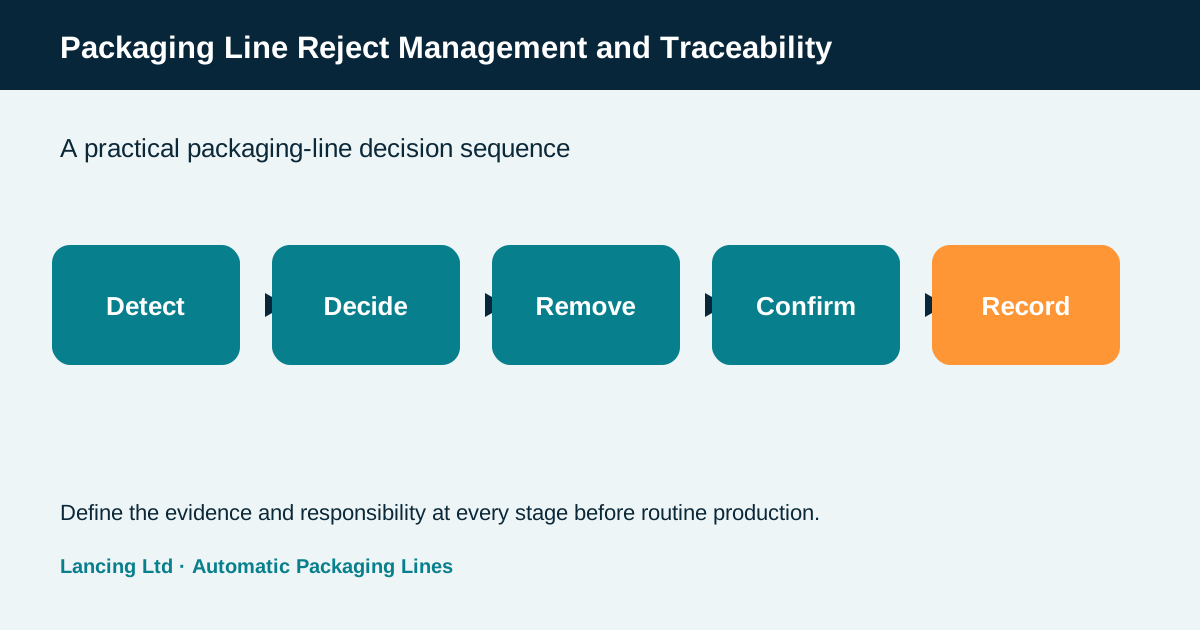
Packaging-line reject management includes the inspection signal, the decision logic, product tracking, the physical reject action, confirmation that the affected pack left the good-product stream and a defined response when confirmation is not received. Treating those stages as one system prevents a valid inspection result from being undermined by poor tracking or an unverified reject mechanism.
- Define the inspection or process condition that creates the reject decision.
- Track the affected pack from the decision point to the reject point.
- Confirm the reject action rather than assuming that activation equals removal.
- Define the line response for a full reject bin, failed confirmation or ambiguous pack position.
How should products be tracked between inspection and rejection?
Product tracking should be based on a method that remains dependable through normal line spacing, short stops, accumulation and restart. The appropriate method depends on the conveyor arrangement, pack stability, sensor positions and whether packs can overtake, close up or be manually disturbed. The control narrative should state what invalidates tracking and how the line recovers safely.
- Record the physical distance and conveyor behaviour between decision and rejection.
- Identify every sensor or encoder input used to maintain pack identity.
- Define what happens after a stop, manual intervention or lost tracking state.
- Test the worst credible spacing and restart conditions during acceptance work.
What is reject confirmation and why is it important?
Reject confirmation is independent evidence that the intended pack was removed from the accepted-product path. It can use a sensor, collection confirmation or another project-specific method. The confirmation must be timed and interpreted against the actual line sequence; an unrelated pack or a bouncing product must not be mistaken for a successful reject.
- Separate the reject command from the reject-confirmed signal.
- Define a permitted confirmation window and the response outside it.
- Prevent production from continuing unnoticed after a confirmation failure.
- Include safe access and controlled emptying of the reject collection area.
A useful reject record identifies the time, line state, relevant inspection or process reason and the outcome of the reject sequence. The level of detail depends on the production and traceability requirement. Records should support investigation without collecting unnecessary personal data or creating an unsupported claim that the machinery provides regulatory compliance by itself.
- Use consistent reason codes that operators and engineers can interpret.
- Distinguish process rejects, inspection rejects and manual removals where required.
- Agree count points so produced, accepted and rejected quantities reconcile.
- Define retention, ownership and export requirements before the controls are finalised.
How should reject systems be tested during FAT and SAT?
Factory and site acceptance tests should challenge the full chain from detection to confirmed containment, including realistic pack spacing, planned stops and credible fault conditions. Testing only the actuator proves movement, not the integrity of the quality-control function. The agreed test method should use representative packs and a documented expected response.
- Challenge each configured reject reason separately.
- Verify the correct pack is removed at minimum and maximum planned spacing.
- Test failed confirmation, full collection and restart behaviour.
- Reconcile accepted and rejected counts against the agreed count boundaries.
What should be supplied for a reject-system quotation?
A useful quotation needs the pack dimensions and stability, conveyor speed range or target output, inspection device and decision signal, reject reasons, available line length, reject-container arrangement, required confirmation and record expectations. Representative packs and the intended inspection equipment help expose tracking and handling risks before the project scope is fixed.
- Pack samples, dimensions, weights and orientation.
- Inspection or process signals and available interfaces.
- Layout drawing and distance available for tracking and rejection.
- Required reject handling, confirmation, records and acceptance tests.