Bottle loading
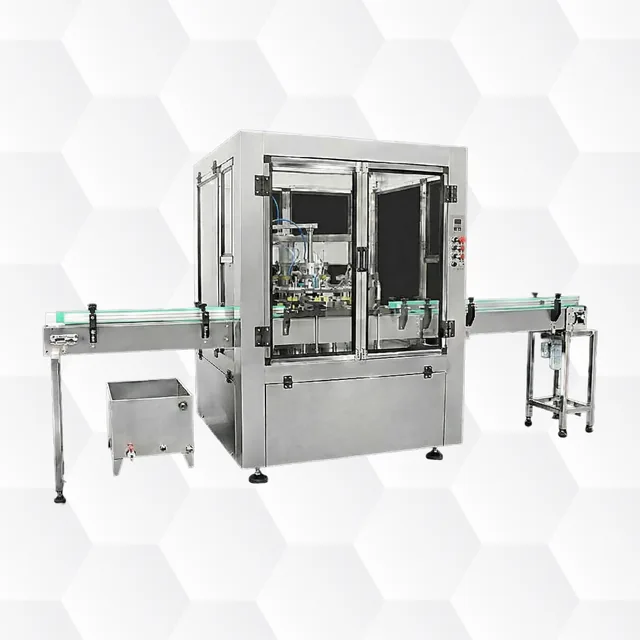
Use manual tables, depalletising interfaces or automated unscrambling to introduce empty containers.

Reliable infeed for containers and closures
Create a controlled supply of clean, correctly oriented containers and closures so the main line can run without avoidable feeding interruptions.
Your production requirement
Container and closure feeding often sets the practical rhythm of an automatic line. Irregular bulk supply, static, lightweight bottles or difficult closures can create stops that are not visible in the headline machine speed.
Rinsing, unscrambling, elevator feeding, bowl feeding, manual loading and controlled infeed options are compared against pack geometry, hygiene, labour, speed and available footprint.
Line architecture
The right arrangement protects packs and supplies downstream equipment at a repeatable rate.
Use manual tables, depalletising interfaces or automated unscrambling to introduce empty containers.
Invert, air-rinse or otherwise prepare containers where the product and quality plan require it.
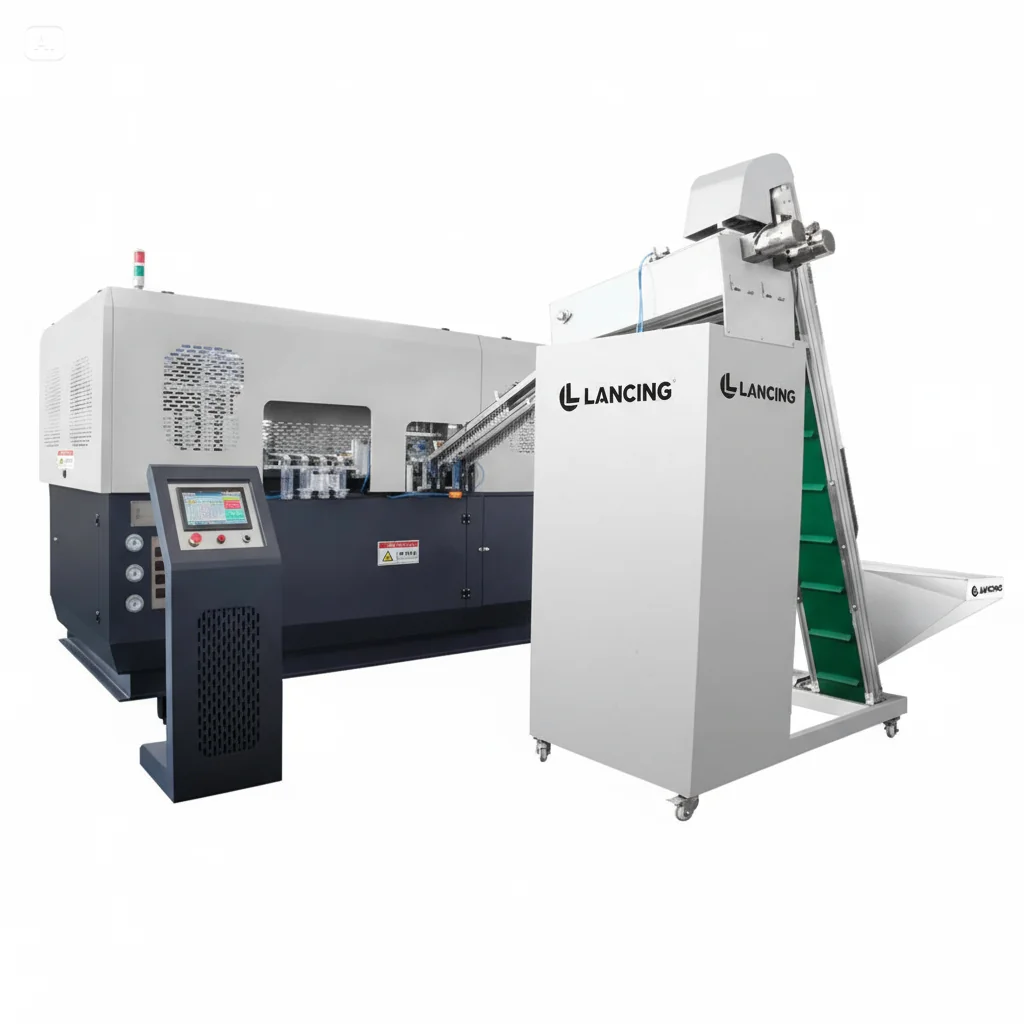
Elevate, orient and transfer caps or closures to the capping machine.
Use sensors, gating and accumulation to maintain spacing into the next line stage.
Specification checklist
How components arrive at the machine can be as important as their nominal dimensions.
Your project route
Tell us the product, pack formats, output target, shifts, site constraints and future plans.
We review representative product, containers, closures and labels so recommendations are based on real production materials.
You receive a coordinated line concept covering machinery, transfers, controls, guarding, access, utilities and changeovers.
We support installation, integrated testing, settings, operator training and production handover against the agreed scope.
You can plan servicing, critical spares, new formats and future improvements around production risk.
Operational value
Appropriate bulk loading and feeding can remove repetitive presentation tasks.
Containers and closures reach the next operation in a controlled attitude.
Sensible buffers and low-level warnings give operators time to replenish without immediate stops.
Start with your product and production goal
Tell us what you pack, the container and closure, your target output and the space available. We will help you identify the right line sequence and level of automation.
Straight answers
No. Rinsing depends on the container supply, product, hygiene plan and quality requirements. It should be justified by the process.
Often yes, but bottle rigidity, geometry, static and damage risk need to be tested against the proposed feeding method.
They can be, although dip tubes and irregular geometry may require specialist handling and more space than standard cap feeding.
Yes. A controlled manual loading table can be a practical choice at lower speeds or where format variety makes full automation uneconomic.
Next steps
Solution
Continue planning with this related automatic-line resource.
View bottle packaging linesModule
Continue planning with this related automatic-line resource.
View conveying and accumulationService
Continue planning with this related automatic-line resource.
View line integrationReliable component supply
Automatic feeding depends on bulk behaviour. Containers and closures can nest, tangle, bridge, mark or change orientation when handled in quantity. The project should therefore review how components are packed, delivered, stored and loaded into the line.
Feeding capacity should be based on effective supply to the next machine, including refill frequency and recovery after stops. A feeder with a high nominal rate may still cause starvation if the hopper is difficult to replenish or the transfer path is sensitive to variation.
| Input | Record | Design use |
|---|---|---|
| Bulk presentation | Bag, box, layer, pallet or returnable container and typical quantity | Loading method, hopper and operator task |
| Component behaviour | Nesting, tangling, static, scuffing, flexibility and dimensional variation | Sorting principle and contact surfaces |
| Required supply | Effective demand, refill interval and desired autonomy | Feeder capacity and low-level response |
| Handover | Orientation, spacing, elevation and next-machine interface | Transfer design and controls handshake |
Project check
Bulk-feed risks may not appear when individual samples are placed by hand.
Project check
Consider bag or box handling, lift height, access and line interruption.
Project check
Define warning, controlled stop and restart behaviour before the feeder is empty.
Use the related pages to turn this guidance into a clearer scope and a more useful technical discussion.
A useful feeding trial includes a normal replenishment event. Ask how the machine behaves as one box or bag of components runs down and the next is introduced. Keep the component batch identification with the observations so that a change in bottle or closure behaviour can be traced back to the supplied material.
For rinsing, describe the acceptance check after treatment as well as the proposed medium. The review should distinguish an empty-container preparation step from any validated cleaning or sanitising claim. Specify who decides that the container is suitable for the next process and what evidence is needed.
Send the intended delivery presentation as well, where practical. The box, bag, layers and component quantity help expose loading and bulk-handling constraints.