Product supply
Define feed tanks, pumps, pipework, level control and any heating, agitation or recirculation needed.

Liquid dosing and complete-line integration
Match the filling principle to the liquid, then engineer the surrounding handling, closure and labelling stages as one reliable automatic process.
Your production requirement
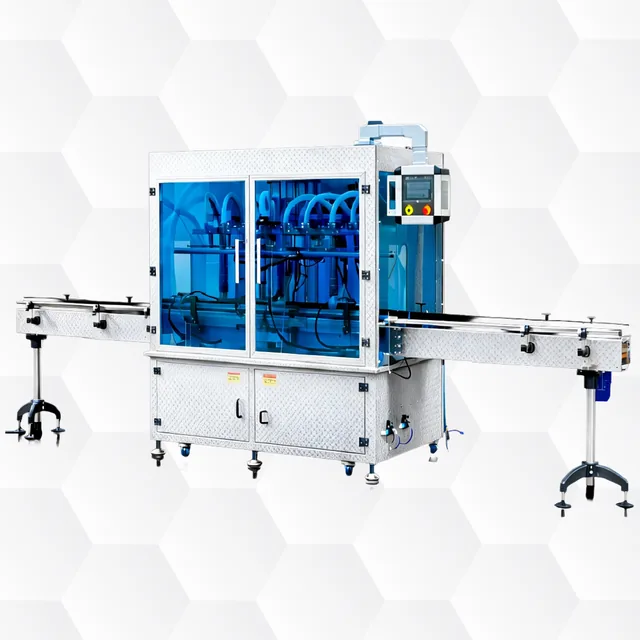
Free-flowing liquids, foaming products, oils, solvents and products containing small particulates do not all respond to the same filling method. Product characteristics, fill range, accuracy, hygiene and cleaning expectations determine the shortlist.
The filler must also fit the rest of the line. Nozzle movement, container indexing, drip control, product supply, tank level and downstream capping all influence achievable flow and finished-pack quality.
Line architecture
The right architecture balances product control with container movement and downstream capacity.
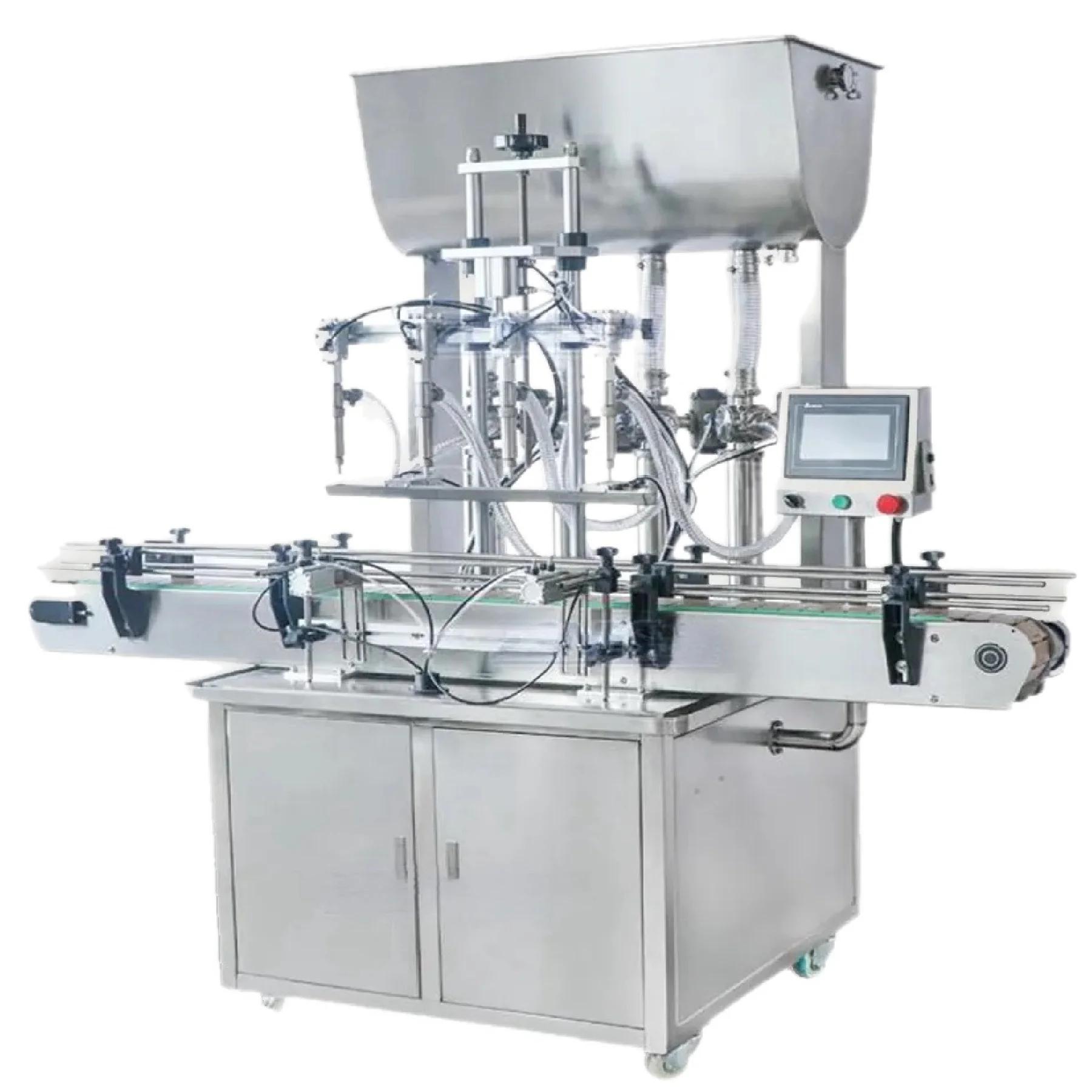
Define feed tanks, pumps, pipework, level control and any heating, agitation or recirculation needed.
Select gravity, vacuum, volumetric, flowmeter, weighing or other principles against the application.
Manage foaming, diving fills, stringing or residual product to protect the container and line.
Coordinate cap placement, sealing, label adhesion and coding after filling.
Specification checklist
A meaningful filling assessment needs more than the product name and nominal bottle size.
Your project route
Tell us the product, pack formats, output target, shifts, site constraints and future plans.
We review representative product, containers, closures and labels so recommendations are based on real production materials.
You receive a coordinated line concept covering machinery, transfers, controls, guarding, access, utilities and changeovers.
We support installation, integrated testing, settings, operator training and production handover against the agreed scope.
You can plan servicing, critical spares, new formats and future improvements around production risk.
Operational value
The chosen filling principle is matched to the product, range and process rather than selected on speed alone.
Nozzle design, drip capture and transfer timing help manage spills and product residue.
Filler cycle, container supply and downstream machines are balanced around the required output.
Start with your product and production goal
Tell us what you pack, the container and closure, your target output and the space available. We will help you identify the right line sequence and level of automation.
Straight answers
Applications can include free-flowing liquids, oils, foaming products, sauces, chemicals and other specialist liquids. Suitability depends on product properties and the filling technology selected.
Sometimes, but accuracy and cycle time can vary across a wide range. The minimum and maximum volumes should be tested against the proposed dosing system.
Yes. Any flammable product or hazardous-area requirement must be declared at the beginning so the equipment, controls and site interfaces can be assessed correctly.
Representative product, filled and empty containers, closures and labels help evaluate dosing, foaming, container stability and downstream presentation.
Next steps
Solution
Continue planning with this related automatic-line resource.
View viscous product filling linesIndustry
Continue planning with this related automatic-line resource.
View chemical and household linesGuide
Continue planning with this related automatic-line resource.
View automatic line specification guideLiquid-line process definition
Liquid filling performance depends on the condition delivered to the filling system. Supply pressure, head, temperature, recirculation, entrained air, foam and particulates should be considered at the point of use, not only in a laboratory description.
The downstream pack condition should also be defined. A nominally correct dose may still create capping or labelling problems if the container is wet, the neck is contaminated, foam persists or the product changes bottle shape.
| Boundary | Define | Responsibility question |
|---|---|---|
| Bulk supply to filler | Source, pressure or head, temperature, filtration and level control | Who supplies and controls the feed system? |
| Filling operation | Dose range, measurement method, nozzle behaviour and container support | What conditions and samples are used for acceptance? |
| Post-fill transfer | Drip, foam, settling, neck condition and dwell time | What must be achieved before capping or sealing? |
| Cleaning and changeover | Flush, recovery, dismantling, inspection and waste route | Which procedures and utilities are customer supplied? |
Project check
Choose the dosing principle after reviewing viscosity, foam, particulates and required cleanability.
Project check
Avoid starvation, pressure variation or aeration that changes the filling condition.
Project check
Coordinate nozzle cut-off, conveyor timing and neck cleanliness with the closing stage.
Use the related pages to turn this guidance into a clearer scope and a more useful technical discussion.
LIQUID LINE BUYER QUESTIONS
Liquid-filling performance depends on product behaviour, container geometry, required fill definition and the complete upstream and downstream process. The answers below identify the variables that need testing rather than assuming one filling method suits every liquid.
The suitable filling method depends on viscosity, foaming, particulates, temperature, chemical compatibility, hygiene requirements, target fill definition and container opening. Free-flowing liquids, foaming products and viscous or particulate products can require different pumping, nozzle and control arrangements. A representative product trial is the safest way to confirm the method and settings.
Foam can be caused by product chemistry, nozzle height, fill velocity, air entrainment, return flow, container shape and temperature. Bottom-up or staged filling, different nozzle geometry and controlled acceleration may reduce foam, but the solution must be tested with the real product. Slowing the filler alone may not address the underlying cause.
Fill consistency can be affected by product supply pressure, tank level, temperature, entrained air, container presentation, nozzle alignment, line stops and the control method used to define a completed dose. The filler should be assessed with the intended feed system and normal line interruptions, because stable bench conditions may not represent production.
Provide the product and safety data where relevant, viscosity or temperature range, presence of foam or particulates, container and neck samples, fill range, tolerance definition, cleaning expectations, target output and upstream product supply. Closure, label, coding and footprint information is also needed when the filler forms part of a complete automatic line.