
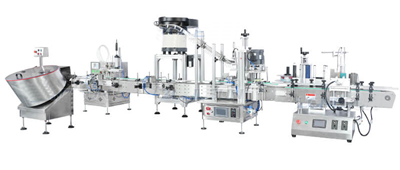
A useful packaging-line specification describes the production duty rather than prescribing machinery too early. It lets suppliers apply the right filling, handling and integration knowledge while keeping quotations comparable.
1. Begin with the production objective
State the business problem the project must solve. It may be labour availability, output growth, dose consistency, closure quality, traceability, product presentation, safety, ageing equipment or the need to launch a new pack.
Rank the objectives. A line designed primarily for maximum speed can look very different from one designed for many short campaigns and fast clean-down. The specification should make those priorities visible.
- Current process and its main constraint
- Required date or operational trigger
- Expected production growth
- Non-negotiable quality or safety outcomes
- Functions that may remain manual
2. Build a complete product and format matrix
List every product, fill quantity, container, closure, label and downstream pack the line must handle. Group similar formats, but do not hide meaningful differences such as bottle taper, pump dip tubes, cap liners or label positions.
Mark the priority format, the smallest and largest formats, and any difficult combination. Include credible future packs where their dimensions or process needs could affect the machine choice.
| Field | Example information | Why it matters |
|---|---|---|
| Product | Free-flowing liquid, cream, powder | Determines product path and dosing principle |
| Container | Material, dimensions, neck, rigidity | Determines handling, tooling and transfers |
| Closure | Screw cap, pump, trigger, seal | Determines feed and application method |
| Label | Size, position, winding, variable data | Determines labeller and coding arrangement |
| Secondary pack | Bundle or case count and pattern | Determines collation and end-of-line route |
3. Describe product behaviour and product supply
The product name alone is not a filling specification. Record viscosity or bulk density range, temperature, foaming, particulates, static, corrosivity, solvent content, aeration and any tendency to string, drip or settle.
Explain how product reaches the line. Batch vessels, pumps, hoppers, mixers, heating, recirculation and level control can be part of the filling performance. Include cleaning and product-change expectations.
- Representative product condition at the filler
- Minimum and maximum fill quantity
- Target accuracy and verification method
- Product-contact material requirements
- Cleaning method and frequency
- Safety data and hazardous-area information where relevant
4. Define output as useful production
Avoid stating only a machine speed. Define the number of accepted packs required over a realistic period and show the production pattern that supports it. Include the format mix, product supply, component replenishment, quality checks, breaks, clean-down and changeovers.
Also state whether the line must recover from short stops and how much buffer is acceptable. These assumptions guide nozzle count, cap-feed capacity, conveyor accumulation and end-of-line equipment.
- Normal sustained output
- Maximum short-term rate
- Good packs per shift
- Shifts and operating hours
- Campaign and batch size
- Changeover and cleaning frequency
5. Map the required line sequence
Describe the process from the way empty packs arrive to the way finished goods leave. Mark manual operations, quality checks, rejects, sampling points and any existing machines that must remain.
Do not assume every stage needs automation. A controlled manual activity can be the correct choice where formats are highly variable or the volume does not justify complex component feeding.
- Container loading, unscrambling or rinsing
- Filling or dosing
- Closure feeding and application
- Sealing, coding, labelling and inspection
- Accumulation, collation and end-of-line packing
- Transfer to the next production or logistics operation
6. Define controls, data and quality responses
State the controls functions that matter to your operation: recipes, access levels, production counts, alarm history, line status, code data, inspection results or connection to site systems. Separate essential functions from optional reporting.
For every inspection, define what is checked, what constitutes failure and how a rejected pack is contained and confirmed. A sensor without a defined response is not a complete quality control.
- No-container-no-fill and no-cap logic
- Machine and line stop philosophy
- Recipe ownership and access
- Coding data source and verification
- Reject confirmation and full-bin response
- Required production or downtime data
7. Survey the site and working envelope
Provide a measured layout with columns, doors, drains, low ceilings, existing machines, operator routes and maintenance access. Confirm the delivery path as well as the final position.
List available utilities and site standards. Power, compressed air, extraction, product services, water, drainage and network connections can all affect cost, programme and layout.
- Room dimensions and fixed obstructions
- Access route and lifting constraints
- Power and compressed-air details
- Extraction, ventilation, drainage and washdown
- Floor condition and loading
- Guarding, safety and site integration standards
8. Set acceptance criteria before ordering
Acceptance criteria should reflect the operating objective and use representative formats. Define the test duration, output, allowed stoppages, quality measures, changeover demonstrations and the responsibilities for product and packaging materials.
Separate factory testing from site testing. Some conditions cannot be reproduced until the line is connected to the customer product supply, utilities and surrounding equipment.
| Category | Example criterion | Evidence |
|---|---|---|
| Output | Agreed good packs over a defined run | Counter and recorded rejects |
| Fill | Defined tolerance for selected samples | Calibrated measurement method |
| Closure | Presence and agreed application result | Inspection and sample checks |
| Label/code | Position and readable required data | Visual or instrumented check |
| Changeover | Agreed format restored safely | Timed or witnessed procedure |
9. Compare proposals on the same assumptions
Ask suppliers to state exclusions, utilities, operator tasks, assumed component quality, effective speed, change parts, documentation, installation, training, spares and acceptance scope. A low equipment price can conceal integration or site work that remains with the buyer.
Compare the proposed operating model, not only the number of machines. Consider replenishment, cleaning, fault recovery, maintenance access and support throughout the expected life of the line.
Key takeaways
- Specify the production duty and priorities before prescribing equipment.
- Use representative product and component samples and a complete format matrix.
- Define sustained good output, not only nameplate machine speed.
- Include line interfaces, operator tasks, site services and quality responses.
- Agree measurable acceptance criteria and responsibility boundaries before order.