
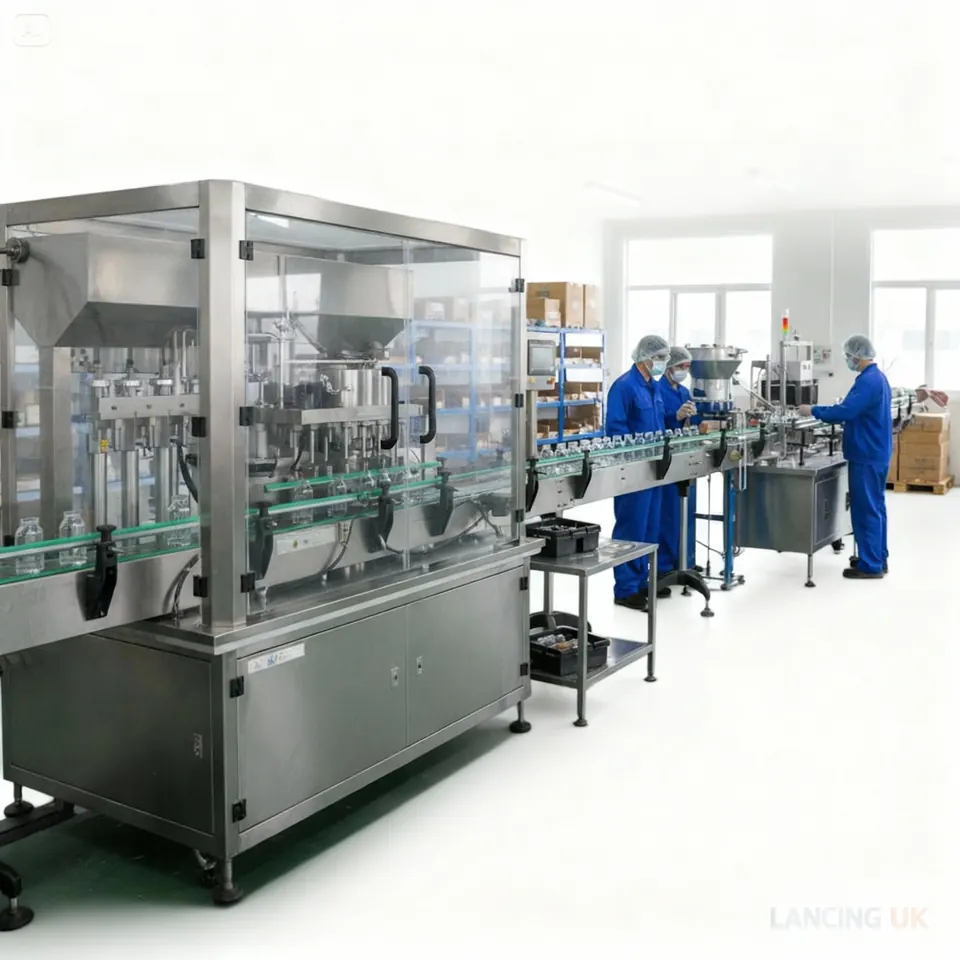
There is no responsible fixed price for an automatic packaging line without a defined duty. Cost changes with product, speed, pack complexity, automation level, controls, inspection, site work and the division of project responsibilities.
1. Start with the line boundary
The first cost question is where the project begins and ends. A quotation for a filler is not comparable with a quotation that includes container feeding, capping, labelling, coding, conveyors, guarding, installation and commissioning.
Write the process sequence and mark customer-supplied equipment, existing assets, site services and manual tasks. This turns a general price request into an identifiable scope.
| Category | What it may include | Common hidden assumption |
|---|---|---|
| Core machines | Filling, capping, labelling, sealing | Quoted speed applies only to one format |
| Handling | Feeders, conveyors, accumulation, rejects | Customer supplies transfers or loading labour |
| Controls and safety | Line control, guarding, interlocks, recipes | Only local machine control is included |
| Site and installation | Delivery, positioning, services, commissioning | Power, air and product connections remain customer work |
| Support | Training, manuals, spares, service | Only basic handover is included |
2. Product and pack complexity drive equipment choice
A stable round bottle filled with a free-flowing liquid and closed with one screw cap is usually simpler to automate than a flexible shaped bottle, viscous product and trigger closure. Powders, corrosive products, particulates, decorative packs and hazardous areas can add specialist requirements.
Format range matters too. Wider ranges can require extra change parts, servo axes, recipes, adjustable handling or separate tooling. Those features may increase capital cost but reduce manual setup and future modification.
- Product flow and safety characteristics
- Container stability and surface sensitivity
- Closure feeding complexity
- Label positions and inspection
- Number of formats and changeover frequency
- Cleaning and material requirements
3. Throughput changes machine size and feeding
Higher output can require more filling heads, continuous rather than indexed handling, automatic bottle and cap feeding, larger product supply, faster label application and more capable end-of-line machinery.
The target should be expressed as sustained good packs under representative conditions. Designing every module for an inflated peak speed can add cost without improving shift output if replenishment or changeovers remain the real constraint.
4. Automation level should match repeated labour
Automation is most valuable where a task is repeated at sufficient volume, influences quality or safety, or limits the rest of the process. Full automation of unusual caps, short campaigns or varied case patterns may have a weaker return than controlled manual assistance.
A hybrid line can be a deliberate solution. For example, filling, capping and labelling may be automatic while operators load an irregular component or pack cases. The labour and ergonomic implications should still be quantified.
- Current people and hours by task
- Target staffing and redeployment
- Repetitive or safety-sensitive operations
- Campaign length and format variety
- Operator intervention expected at normal output
5. Integration, controls and inspection add real capability
Conveyors, accumulation, sensors, line controls, guarding and reject systems are not cosmetic extras. They determine how modules exchange packs, recover from short stops and protect product quality.
Data integration, vision inspection, checkweighing, serialisation or site-system connections can add engineering, hardware and testing. Define which functions are essential and which are future options.
- Line control versus independent machine control
- Recipe and format management
- Coding data and verification
- Inspection and confirmed reject
- Production counts and stop data
- Network and cybersecurity responsibilities
6. Site work can be a separate capital package
Floor preparation, utilities, extraction, drainage, product pipework, electrical distribution, access changes, lifting, building work and production relocation can sit outside the machinery quotation.
A site survey and responsibility matrix should identify these costs early. A compact or complex layout may also require more custom conveyor and guarding work than an open new-build room.
- Delivery and lifting route
- Power, air and product services
- Extraction, ventilation and drainage
- Floor, access and guarding interfaces
- Removal or relocation of old machinery
- Out-of-hours or shutdown working
7. Trials, documentation and acceptance have a cost
Application trials, sample tooling, factory acceptance, site acceptance, extended production support and project-specific documentation all require time and resources. They also reduce uncertainty and can be essential for complex products or quality systems.
State the documentation and testing expectation before order. Adding it after equipment is built can be slower and more expensive than including it in the original engineering scope.
| Item | Confirm in proposal | Buyer action |
|---|---|---|
| Trials | Products, formats and success criteria | Supply safe representative samples |
| Factory test | Run length and included formats | Attend or approve remotely |
| Site test | Conditions and performance criteria | Prepare services, people and materials |
| Training | Audience, duration and content | Release suitable staff |
| Documentation | Manuals, drawings, backups, certificates | Review project requirements early |
8. Compare total cost of ownership
Capital price is only one part of the economic decision. Consider labour, product giveaway, reject rate, consumables, utilities, cleaning time, format changes, maintenance, critical spares and the production consequence of downtime.
A more maintainable line with accessible parts, clear settings and suitable support may create better value than a lower-priced system that is difficult to change or recover after a fault.
- Expected useful output
- People per shift
- Changeover and cleaning duration
- Wear and consumable costs
- Critical spare holdings
- Support response and parts availability
- Expected life and future format capability
9. Build a budget in layers
Separate the budget into core line equipment, optional automation, site work, project support and contingency. This keeps the essential production route visible while allowing features to be prioritised if the first estimate exceeds the available capital.
Do not remove scope blindly. Revisit the production objective and ask which functions create capacity, consistency, safety or commercial flexibility. A staged plan may be preferable to a compromised one-stage purchase.
- Essential automatic production sequence
- Required handling, controls and safety
- Quality inspection and data functions
- Site preparation and installation
- Training, initial spares and support
- Contingency for known project uncertainty
Key takeaways
- Automatic packaging line cost depends on a defined product, pack, rate and project boundary.
- Compare total installed capability, exclusions and operating tasks—not isolated machine prices.
- Higher speed and difficult products usually increase feeding, handling and engineering needs.
- Include site work, trials, documentation, training and spares in the capital plan.
- Evaluate total cost of ownership and useful production over the expected life of the line.