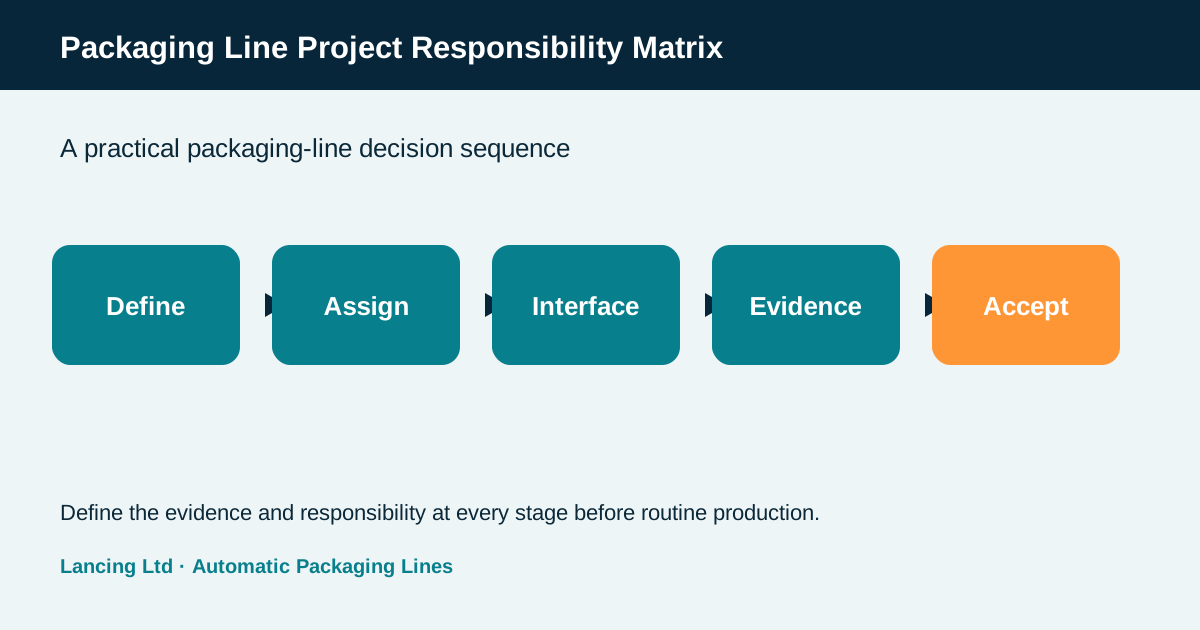
What is a packaging-line responsibility matrix?
A packaging-line responsibility matrix is a project document that assigns an owner, supporting parties, inputs, outputs and acceptance evidence to each workstream or interface. It can use a RACI format or a simpler supplier/customer schedule, but it must be specific enough to resolve practical boundaries such as who provides power, who supplies interlocks and who approves the final layout.
- Use one line for each deliverable or interface that could otherwise be assumed.
- Identify the responsible owner and the party that must approve or provide information.
- Link the responsibility to a drawing, specification, test or handover record.
- Control revisions so quotation, order and delivery use the same boundary.
Which packaging-line responsibilities should be assigned?
The matrix should cover mechanical equipment, conveyors, controls, guarding interfaces, utilities, product and pack information, civil or building work, network connections, inspection and coding interfaces, trials, FAT, delivery, installation, SAT, training, spares and final documentation. The exact list depends on the project; irrelevant headings should be removed rather than left ambiguous.
- Machinery, change parts and interconnecting equipment.
- Electrical supply, compressed air, extraction, drainage and network services where applicable.
- Product samples, packaging materials, format drawings and approval decisions.
- Testing, installation resources, permits, access, training and acceptance evidence.
How should machine interfaces be represented?
Each machine interface should identify the physical transfer, control handshake, safety relationship, data exchange and fault response that cross the project boundary. Naming only the two machines is not enough. The matrix should point to the drawing or interface schedule that defines signals, ownership, timing and recovery behaviour.
- Product transfer height, direction, speed relationship and accumulation assumptions.
- Ready, run, starved, blocked, fault and stop signals.
- Emergency-stop or safety-circuit boundaries and validation responsibility.
- Data ownership, count points, record destinations and cybersecurity approval.
When should the responsibility matrix be agreed?
The first version should be available before quotations are compared, then refined before order placement and controlled through design reviews. Waiting until installation exposes assumptions when changes are expensive and time-sensitive. Any change to scope, layout, interface or acceptance evidence should update the matrix and the affected technical documents together.
- Issue a tender or enquiry version with the project brief.
- Resolve exclusions and provisional items before commercial commitment.
- Review responsibilities at layout, controls and site-readiness stages.
- Confirm the final as-built responsibility and support boundary at handover.
How does a responsibility matrix improve quotation comparison?
A responsibility matrix lets a buyer compare total delivered scope instead of comparing headline machine lists. Two quotations can describe similar equipment while assigning conveyors, guarding interfaces, coding integration, site works or acceptance tests differently. Aligning the responsibility schedule exposes exclusions and reduces the risk of selecting a lower price that leaves essential work unowned.
- Compare included equipment and interconnections.
- Compare engineering, testing, installation and training scope.
- Identify customer-provided utilities, labour and third-party services.
- Record unresolved assumptions as commercial and programme risks.
The starting information is the product and pack range, target line result, current or proposed layout, machinery list, site standards, utilities, third-party systems, testing expectations and project programme. Where information is not yet known, the matrix should name the decision owner and required date instead of silently allocating the risk to another party.
- Approved project brief and format list.
- Existing-equipment information and interface drawings.
- Site utility, safety, IT and installation requirements.
- Acceptance, training, documentation and support expectations.