Product conditioning
Consider heating, agitation, deaeration or controlled feed where product consistency changes during a batch.

Pastes, creams, gels and sauces
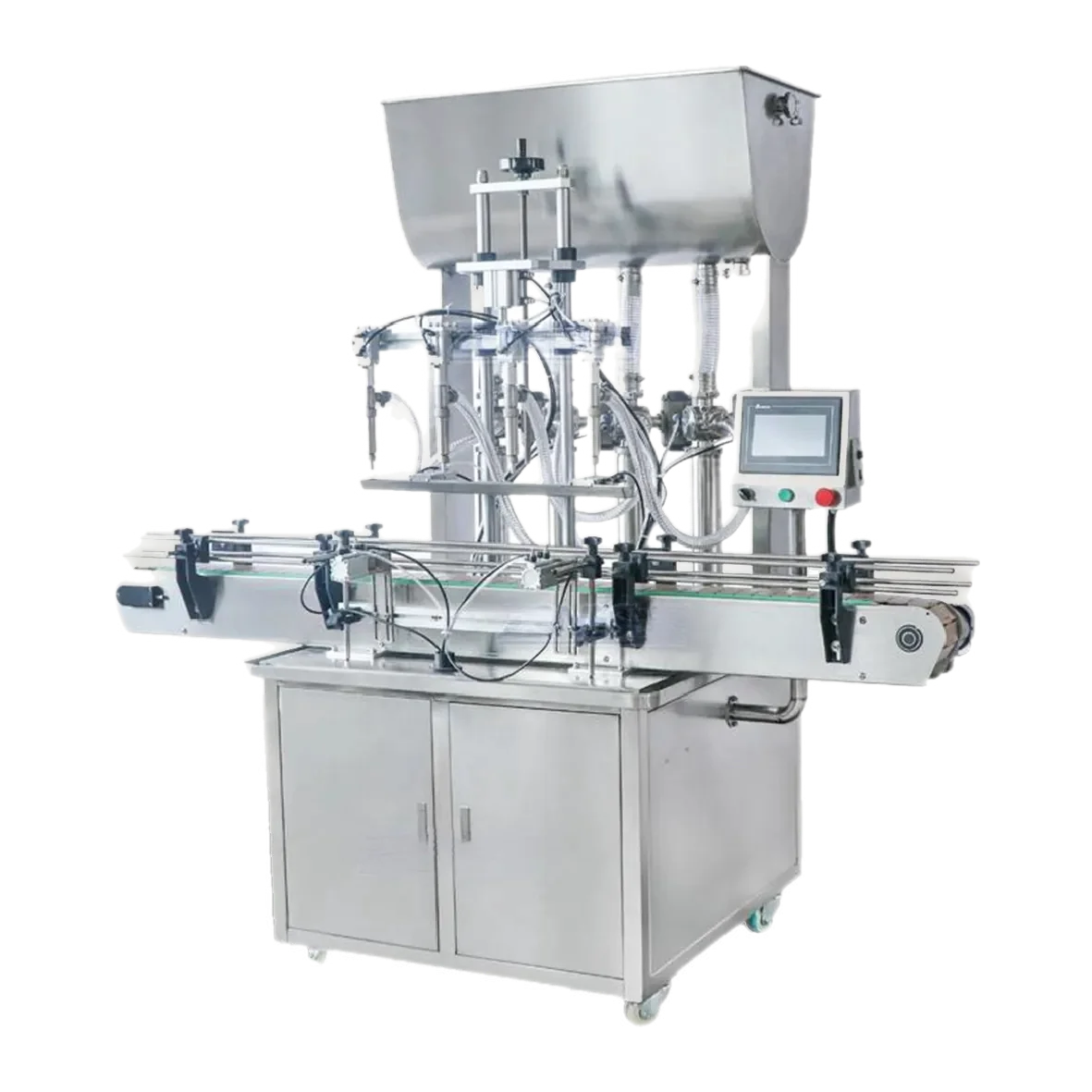
Control thick, stringing or particulate products through an automatic line designed around product transfer, dosing, clean cut-off and closure quality.
Your production requirement
Viscous products may need positive product transfer, larger-bore pipework, heated or agitated hoppers, diving nozzles or shut-off arrangements that create a cleaner cut. Particulates and temperature changes can further affect repeatability.
The filling stage also changes what happens next. Product around the neck can interfere with capping or sealing, while container pressure and nozzle withdrawal can affect lightweight packs. These interactions are addressed in the line design.
Line architecture
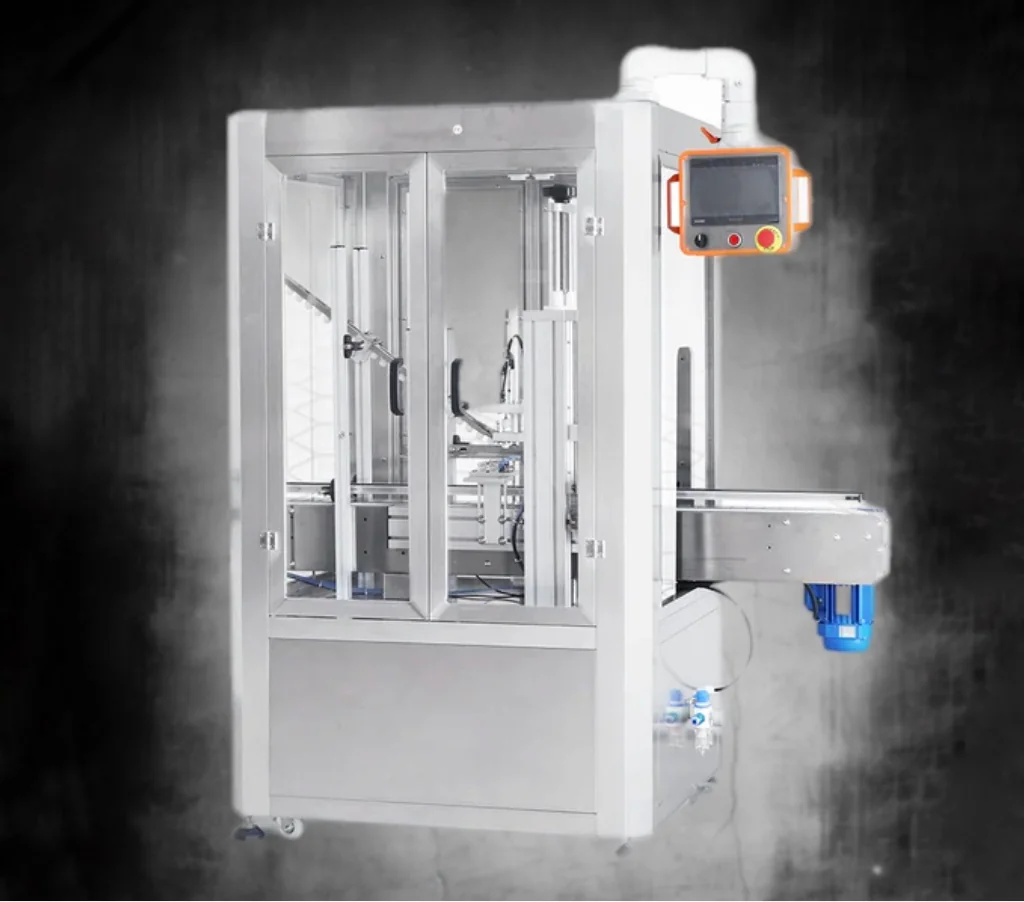
Product preparation and dosing are coordinated with the pack-handling and closure sequence.
Consider heating, agitation, deaeration or controlled feed where product consistency changes during a batch.
Use a method suited to the viscosity, particulates, fill range and cleaning requirement.
Select nozzle and valve arrangements that manage tails, drips and product on the container finish.
Protect cap application, sealing and label areas while keeping access practical for cleaning.
Specification checklist
Bench samples alone may not represent product temperature, shear or particulate distribution on the line.
Your project route
Tell us the product, pack formats, output target, shifts, site constraints and future plans.
We review representative product, containers, closures and labels so recommendations are based on real production materials.
You receive a coordinated line concept covering machinery, transfers, controls, guarding, access, utilities and changeovers.
We support installation, integrated testing, settings, operator training and production handover against the agreed scope.
You can plan servicing, critical spares, new formats and future improvements around production risk.
Operational value
Supply, dosing and nozzle design are treated as one product path.
Cut-off and container movement are planned to reduce trailing product and contaminated necks.
Cleaning access, format tools and product-contact parts are considered from the outset.
Start with your product and production goal
Tell us what you pack, the container and closure, your target output and the space available. We will help you identify the right line sequence and level of automation.
Straight answers
Examples include creams, gels, lotions, sauces, pastes, adhesives and other products that do not flow like water. Actual behaviour and temperature matter more than the product category alone.
Often yes, subject to particle size, fragility, distribution, passage diameter and the required dose. Representative samples are essential.
Heating can be considered where it is appropriate to the product and process. Temperature control, safety and clean-down must be included in the specification.
Nozzle geometry, positive shut-off, diving motion, suck-back and product condition can all influence cut-off. The best approach is application-specific.
Next steps
Solution
Continue planning with this related automatic-line resource.
View liquid filling linesIndustry
Continue planning with this related automatic-line resource.
View cosmetics and personal careIndustry
Continue planning with this related automatic-line resource.
View food and beverageViscous-product process conditions
Viscous products can change with temperature, standing time, mixing and transfer. A sample should therefore be accompanied by the conditions under which it was taken and the range expected during normal production.
The complete product path matters. Pipe length, bends, valves, hopper geometry, pump choice and nozzle cut-off can affect pressure, air entrainment, stringing and the time required to achieve a clean pack before capping or labelling.
| Condition | Record | Why it matters |
|---|---|---|
| Product state | Temperature, mixing history, settling time and batch variation | Dosing repeatability and representative trial condition |
| Transfer path | Supply vessel, pump, pipework, elevation and refill method | Pressure loss, shear, air and hopper stability |
| Cut-off | Stringing, drip, suck-back, nozzle contact and neck cleanliness | Nozzle design, dwell and downstream pack quality |
| Cleaning | Flush media, recovery, dismantling and product-change sequence | Product-path design and changeover duration |
Project check
Use the coldest, thickest or most aerated approved condition where that represents real production risk.
Project check
Prevent distortion or movement while positive pressure is applied during dosing.
Project check
Coordinate dwell, conveyor speed and capping so foam or strings do not create closure faults.
Use the related pages to turn this guidance into a clearer scope and a more useful technical discussion.
A stable run from a full supply vessel does not answer every question about a viscous product. Include the expected end-of-batch condition in the trial brief: remaining product level, any permitted agitation, the refill method and the point at which the operator should stop. Keep these conditions distinct from a supplier demonstration using a different feed arrangement.
Record both the filled quantity and the pack condition after nozzle withdrawal. Photograph any tail, neck deposit or entrained air at an agreed inspection point. This connects dosing observations with the downstream closure and presentation requirements without assuming that a change to the filler alone resolves them.
Treat the settings as unconfirmed until both approved recipes have been assessed under their intended production conditions.