What is the difference between robotic case packing and robotic palletising?
Robotic case packing places primary packs or collations into a case, tray or secondary pack. Robotic palletising places completed cases, bags, trays or other units onto a pallet. The product presentation, gripping method, accuracy, cycle sequence and quality checks differ, so one generic robot description is not a complete project specification.
How is the gripper selected?
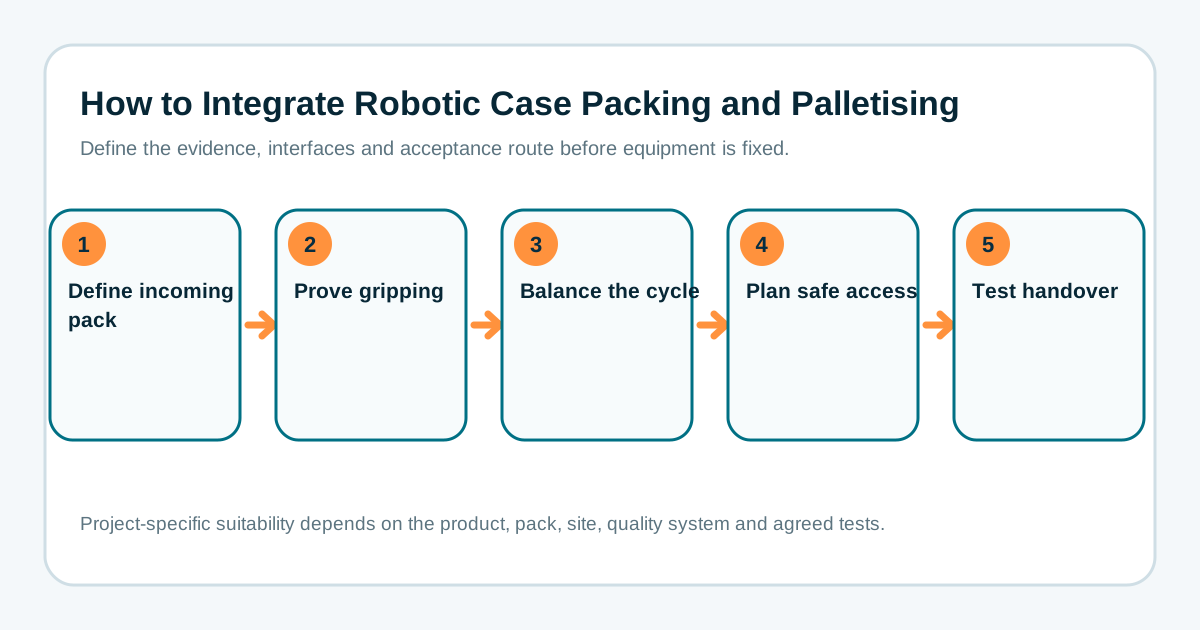
The end-of-arm tool is selected around product shape, weight, surface, porosity, stiffness, contact limits, orientation and failure consequence. Vacuum, mechanical, magnetic or combined methods may be considered where appropriate. Trials should include normal packaging variation and the least favourable approved format.
How is robot speed matched to line output?
Use a complete cycle model that includes product arrival, grouping, pick, placement, layer or case changes, pallet exchange, faults and recovery. A quoted robot cycle under ideal movement does not prove sustained accepted line output. Accumulation and the downstream exchange sequence must be included.
What safety and access information is needed?
Define the cell boundary, guarding, loading and removal access, pallet and consumable replenishment, maintenance tasks, stored energy and the interaction with upstream conveyors. The competent risk assessment determines safety functions and access controls; a collaborative robot label does not remove the need to assess the complete application.
Record every product, case and pallet pattern, including approved orientation and separators. Define which changes are recipe-only, which require tool or guide changes and how the selected format is verified. The business case should include the real changeover frequency and the time required to return to accepted production.
When might a non-robotic or semi-automatic solution be better?
A dedicated mechanical system can suit a stable high-repeat task, while semi-automatic handling may suit low volume, frequent unpredictable formats or an early-stage process that is not yet controlled. The best route depends on demand, format stability, available space, manual-handling risk and the value of future flexibility.