What is packaging-line change control?
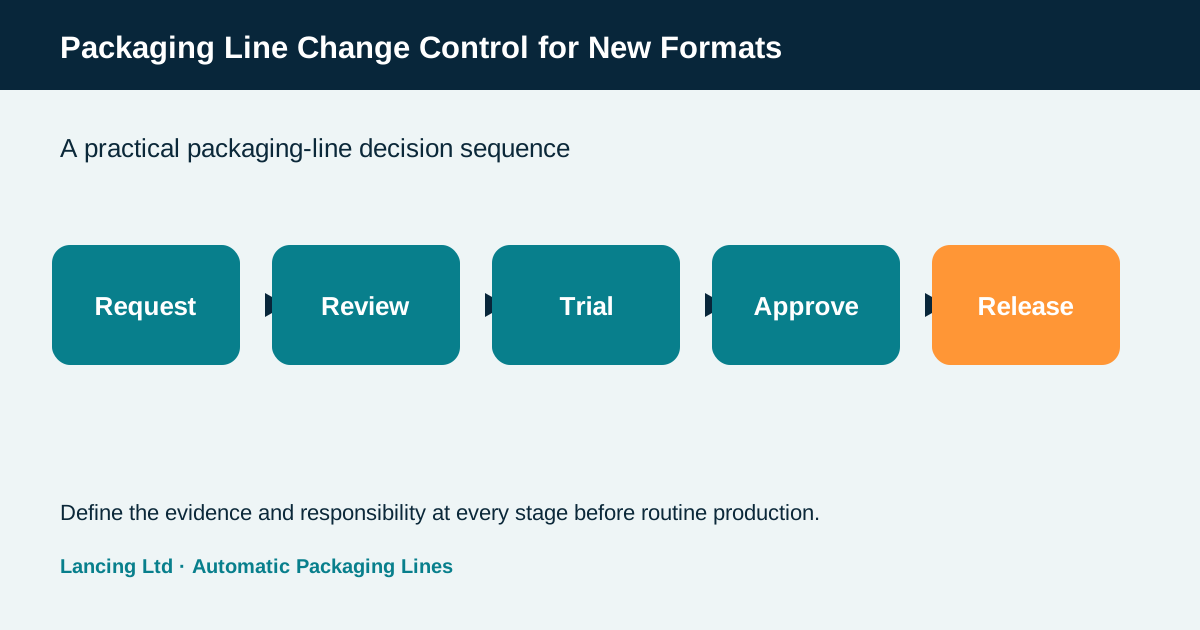
Packaging-line change control is the documented process used to assess, engineer, test, approve and release a change to the accepted production system. It applies to new pack formats, products, recipes, software, change parts, labels, inspection rules and interfaces. The process protects the agreed line state while allowing necessary production development.
- Describe the requested change and business reason.
- Identify affected equipment, documents, recipes, risks and acceptance criteria.
- Test the change with representative materials under defined conditions.
- Release the approved configuration and update training and handover records.
Why can a small pack change affect the whole line?
A small dimensional or material change can alter conveyor stability, guides, detection, filling behaviour, cap presentation, label application, coding contrast, inspection thresholds, reject timing and accumulation. The line should therefore be reviewed as a connected process. A format that runs on one machine may still create losses or unsafe intervention elsewhere.
- Compare dimensions, weight, centre of gravity and surface characteristics.
- Review every transfer, guide, star wheel, screw, sensor and reject point.
- Confirm coding, label and inspection data for the new format.
- Reassess replenishment, accumulation and operator tasks at the required output.
A new-format trial should prove safe handling, product quality, machine settings, accepted output, reject behaviour, changeover instructions and recovery from credible short stops. The exact test depends on the format and line. Samples must represent normal variation, not only the easiest packs, and the expected result should be agreed before the trial starts.
- Run representative product, containers, closures, labels and secondary packaging.
- Challenge the full process sequence rather than one isolated machine.
- Record settings, observations, rejects, interventions and unresolved actions.
- Retain approved reference samples or drawings where appropriate.
How should recipes and settings be controlled?
Recipes should identify the approved format clearly and contain only settings intended for authorised adjustment. Mechanical positions, controller recipes, vision jobs, printer templates and inspection thresholds need a consistent naming and version convention. Where an operator can change a critical value, the permitted range and verification step should be defined.
- Use unique, unambiguous format names.
- Record the approved recipe and associated mechanical change parts.
- Restrict critical engineering settings to appropriate access levels.
- Back up the released configuration and retain the previous accepted state.
When is revalidation or a new acceptance test needed?
The level of revalidation depends on what the change can affect. A change that alters safety functions, control logic, product quality, legal marking, inspection or system interfaces needs a wider review than a routine setting within an already accepted range. The project owner should define the test boundary from the risk and impact assessment rather than from the apparent size of the change.
- Identify affected requirements and previous acceptance evidence.
- Repeat the tests that demonstrate those requirements remain satisfied.
- Record deviations, actions and the authority approving release.
- Update operating, maintenance and training material before routine production.
Provide representative product and packaging samples, drawings or measured dimensions, closure and label details, required output, coding and inspection information, target changeover approach and any known differences from accepted formats. Early information allows the supplier to determine whether settings, guides, tooling, software, trials or a wider engineering change are required.
- Product and full pack-component samples across normal variation.
- Dimensions, weights, tolerances and orientation requirements.
- Label, code, inspection and reject criteria.
- Required production date, trial quantity and approval process.