Close-coupled modules
Reduce transfer distance where pack stability and maintenance access permit.

Automation for constrained footprints
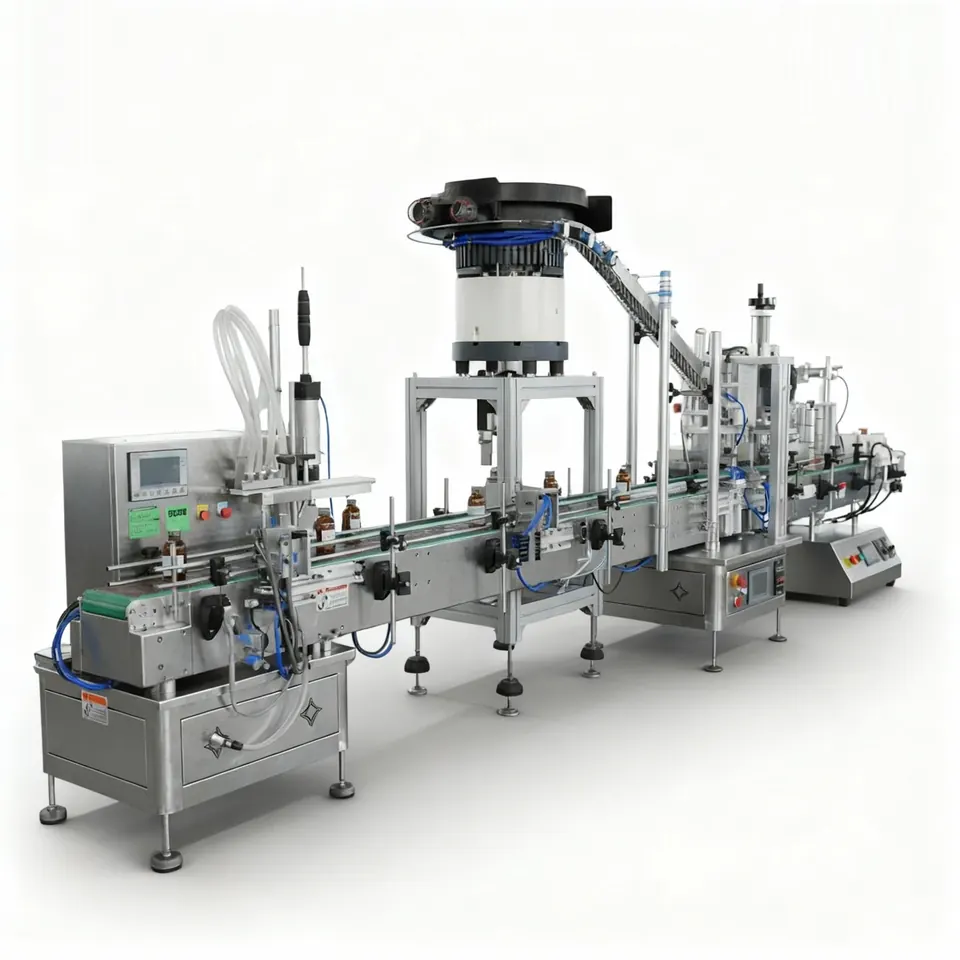
Combine the essential line stages in a space-conscious layout without losing sight of access, cleaning, changeovers and future production needs.
Your production requirement
Compact automation can reduce walking, transfers and floor-space use, but a tight layout must still allow operators to load components, remove rejects, change formats, clean product-contact parts and reach service points.
The best compact line usually prioritises the operations that deliver the strongest labour, consistency or capacity benefit, while keeping selected manual tasks where they remain practical.
Line architecture
Space is allocated according to process value, pack handling and safe access rather than machine outline alone.
Reduce transfer distance where pack stability and maintenance access permit.
Use integrated frames, conveyors or monoblock-style arrangements where the application supports them.
Provide enough accumulation for normal recovery without consuming unnecessary floor space.
Protect loading, cleaning and changeover access in the final layout.
Specification checklist
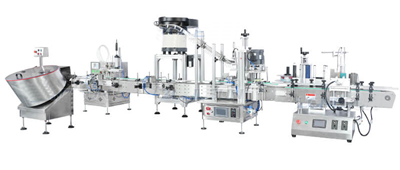
Doorways, columns, drains and service access can be more limiting than the nominal floor area.
Your project route
Tell us the product, pack formats, output target, shifts, site constraints and future plans.
We review representative product, containers, closures and labels so recommendations are based on real production materials.
You receive a coordinated line concept covering machinery, transfers, controls, guarding, access, utilities and changeovers.
We support installation, integrated testing, settings, operator training and production handover against the agreed scope.
You can plan servicing, critical spares, new formats and future improvements around production risk.
Operational value
Modules and transfers are arranged around the actual room and production flow.
Automation is applied to the stages with the clearest operational value.
The working envelope is protected rather than discovered after installation.
Start with your product and production goal
Tell us what you pack, the container and closure, your target output and the space available. We will help you identify the right line sequence and level of automation.
Straight answers
That depends on the process stages, pack handling, guarding, access and output. A measured layout is needed before a responsible footprint can be proposed.
Often yes, but each format affects guides, tooling, recipes and storage. The full range should be included in the initial brief.
They can be, or they can combine automatic core stages with controlled manual loading or packing. The right level depends on output, labour and space.
Expansion can be planned by reserving interfaces, controls capacity and physical space, although future requirements should be defined as clearly as possible at the start.
Next steps
Guide
Continue planning with this related automatic-line resource.
View automatic vs semi-automaticSolution
Continue planning with this related automatic-line resource.
View fill, cap and label linesService
Continue planning with this related automatic-line resource.
View retrofits and upgradesSmall-footprint line planning
A compact automatic line should reduce unused distance, not remove the working envelope needed for operators and maintenance. The layout must still allow material loading, guarding, door opening, cleaning, change parts, fault recovery and safe access to utilities.
Close-coupled machines can reduce conveyor length, but they also reduce natural buffering. The controls philosophy should therefore address how a short stop at one stage affects the neighbouring machines and how the line recovers without damaging product or creating a surge.
| Space requirement | Include in the survey | Risk if omitted |
|---|---|---|
| Operating zone | Operator position, material loading and routine checks | Awkward replenishment or unsafe reach |
| Maintenance zone | Guard and panel opening, removal of change parts and service access | Longer downtime or equipment that cannot be maintained in position |
| Utilities and services | Cable routes, air, extraction, drainage and isolators | Obstructed access or late site changes |
| Delivery and future change | Doorways, lifting route and reserved connection points | Installation delay or no practical route for later expansion |
Project check
A common conveyor or frame can save space but must preserve independent adjustment and fault access.
Project check
Small controlled buffers may protect output better than trying to eliminate every gap.
Project check
Store and move format parts without crossing guarded production or blocking aisles.
Use the related pages to turn this guidance into a clearer scope and a more useful technical discussion.
A compact line should be assessed in several working states, not just with every guard closed and the floor clear. Mark where empty bottles, caps, labels, removed change parts and finished packs will stand during a normal shift. Then review a replenishment and a format change with those items shown in position.
Ask whether a trolley can reach the loading point while another operator removes a reject or opens an access panel. Where two activities compete for the same space, record the intended sequence and whether production must stop. These checks make the layout discussion more useful than comparing machine dimensions alone.
Assess the arrangement against container handling, operator movement and transfer requirements. Request a layout review rather than assuming a shape will suit every product.