Which 2D barcode should be used?
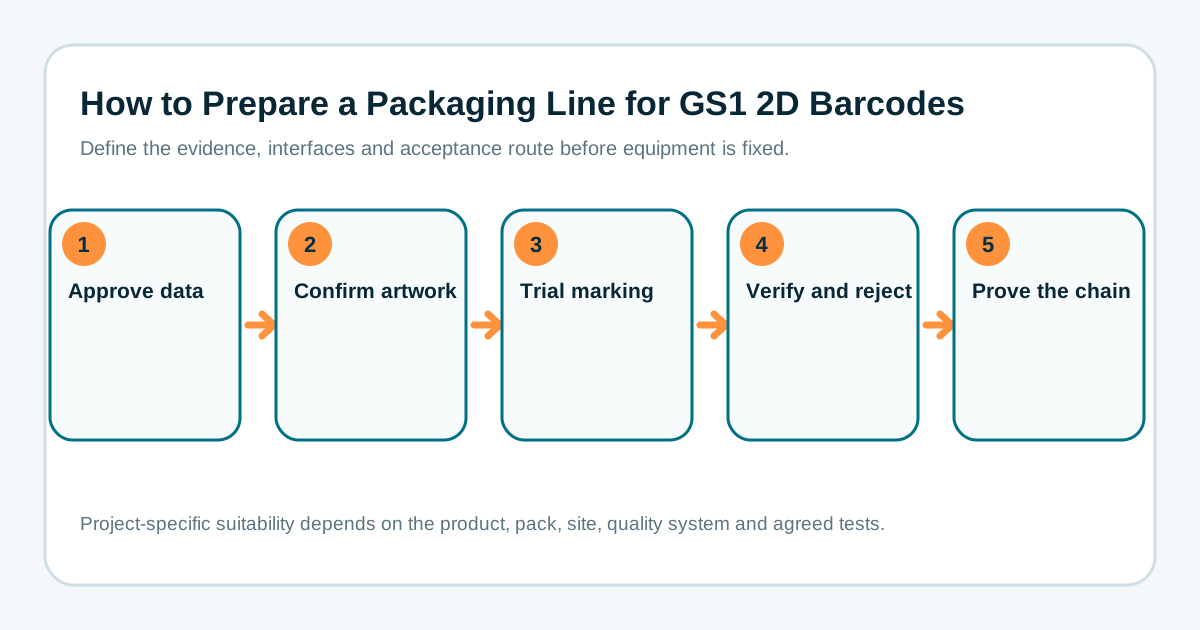
The packaging-line supplier should not choose the commercial data standard in isolation. The brand owner should confirm the required GS1 carrier, data syntax, application identifiers, human-readable information and retailer or sector expectations. The line project can then verify that the marking and inspection equipment supports that approved definition.
Will linear barcodes disappear in 2027?
No single 2027 switch removes every linear barcode. GS1 describes a transition in which retail systems become capable of processing defined 2D barcodes alongside existing linear symbols. A dual-marking period may therefore be required. The pack artwork, scanner behaviour and data hierarchy should be tested so the product is identified once and correctly.
How should 2D codes be verified on the line?
Online inspection should confirm the project-defined presence, readability and data relationship at the production rate and under normal pack variation. A separate offline verification method may also be needed for formal symbol-quality evidence. The project should distinguish process monitoring from standards-based verification rather than treating every camera read as the same type of proof.
What should happen after a missing or unacceptable code?
The line should identify the affected pack, track it to the reject point, remove it from the accepted-product stream and confirm the removal. The response to failed reject confirmation, lost tracking or a full reject container should be defined before the controls are finalised. Counts and records should reconcile with the agreed quality boundary.
What should be tested at FAT and SAT?
Tests should use representative substrates, approved data examples, the planned code position and credible line conditions. Challenge good and bad data, missing codes, poor contrast, pack movement, starts, stops and reject confirmation. Factory tests can prove the configured sequence; site tests should confirm it within the installed data and production environment.
What information is needed for a useful quotation?
Provide pack drawings and samples, artwork areas, substrate colours and finishes, approved code type and data content, line speed range, data source, connectivity expectations, inspection criteria, reject requirements and the evidence expected at acceptance. Unapproved placeholder data should not become the permanent controls specification.