What should automatic packaging-line training cover?
Automatic packaging-line training should cover the complete production sequence, normal line states, start-up and shutdown, replenishment, changeover, cleaning, routine checks, reject handling, safe fault response and the boundaries beyond which an operator must stop and call for support. The content should match the person's role and the actual delivered configuration.
- Purpose and sequence of each machine and transfer.
- Normal, starved, blocked, stopped, faulted and recovery states.
- Approved operating, cleaning and changeover procedures.
- Escalation points, prohibited interventions and emergency arrangements.
How should training differ by role?
Operators, setters, engineers, cleaners, quality staff and supervisors need different levels of access and competence. An operator may need to run and recover the line within approved limits, while engineering staff require separate training for isolation, diagnostics, controlled software access and maintenance. Combining every role into one undifferentiated session can leave important boundaries unclear.
- Define tasks each role is authorised to perform.
- Match system access levels to those responsibilities.
- Provide role-specific practical exercises and evidence.
- Keep site safety, permit and isolation training under the customer's control.
What is the best way to train packaging-line operators?
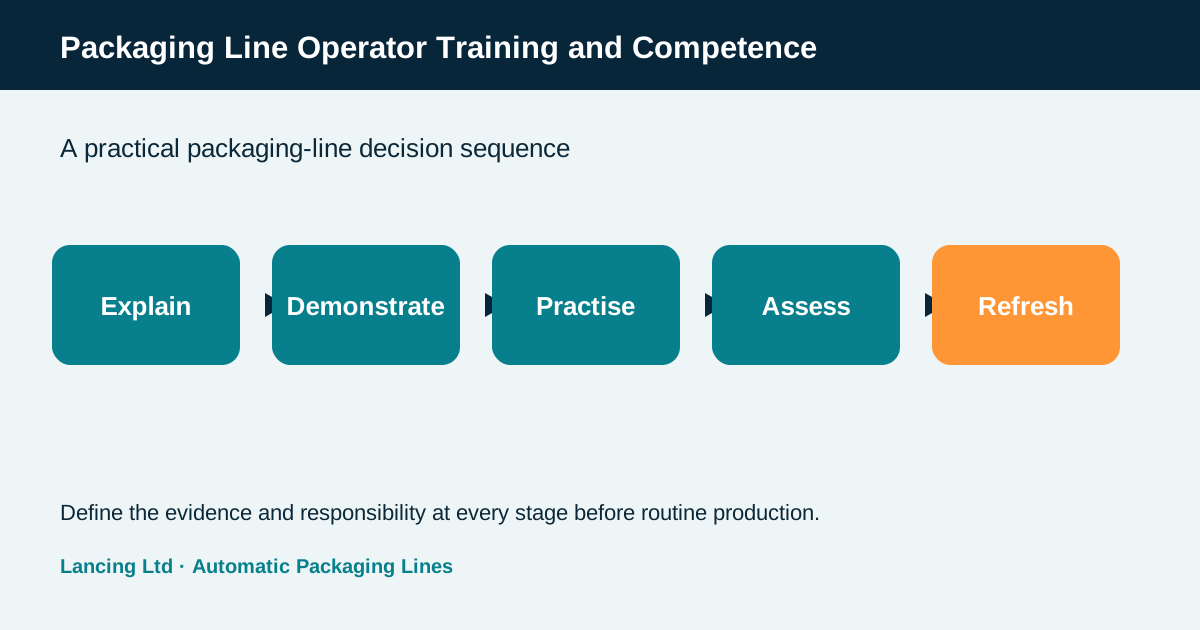
Effective operator training combines explanation, demonstration, supervised practice and a practical check using the real line and representative formats. Classroom-only instruction cannot show transfer behaviour, replenishment pressure or recovery from short stops. The session should allow time for questions and repeatable practice without compromising production or safety.
- Explain the line purpose and normal process before individual controls.
- Demonstrate tasks at normal pace, then repeat with commentary.
- Let trainees perform the task under supervision.
- Record gaps, corrective coaching and the customer's final competence decision.
How should fault recovery be included in training?
Fault-recovery training should distinguish expected operator recovery from conditions requiring engineering or safety intervention. Use controlled scenarios that do not defeat guards or protective functions. Trainees should understand the first-cause alarm, the physical condition that must be corrected, the correct reset sequence and the checks needed before production restarts.
- Use faults and short stops that can be demonstrated safely.
- Teach the difference between clearing a cause and repeatedly resetting an alarm.
- Include reject, tracking and product-containment checks after recovery.
- Define when the line must remain stopped for investigation.
What evidence should be retained after training?
Training evidence should identify the delivered line or module, training date, subjects covered, trainer, attendees and any practical assessment or outstanding actions. The machinery supplier can provide equipment instruction, but the employer remains responsible for its own competence arrangements, site procedures and authorisation of staff for specific work.
- Agenda and equipment or software version covered.
- Attendance and role of each participant.
- Practical tasks demonstrated or assessed.
- Open actions, refresher needs and ownership of future training.
When should refresher training be planned?
Refresher training should be considered when formats, software, guarding, procedures or responsibilities change; after a prolonged shutdown; when incident or performance evidence reveals a gap; and when new staff take over critical tasks. The appropriate interval depends on site risk, staff turnover, task frequency and the employer's competence system rather than a universal timetable.
- Review training after material engineering changes.
- Use recurring faults or unsafe workarounds as evidence of a learning need.
- Maintain an approved internal trainer or access to supplier support where appropriate.
- Include rarely used emergency or recovery tasks in planned refreshers.