REGULATED PACKAGING LINE GUIDE

How to Plan IQ, OQ and PQ for a Packaging Line

Qualification is a documented lifecycle, not a set of generic certificates added at delivery. The most reliable projects define user requirements, evidence ownership, protocols and change control before detailed design begins.

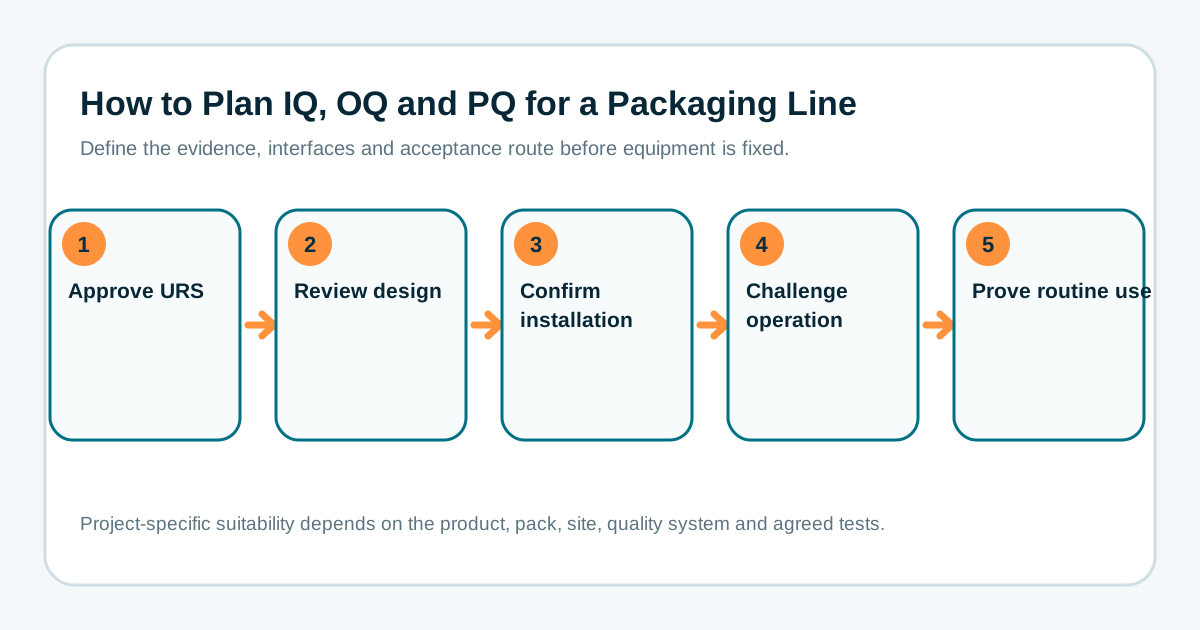
How to Plan IQ, OQ and PQ for a Packaging Line decision sequence

ANSWER FIRST

How should IQ, OQ and PQ be planned for a packaging line?

IQ, OQ and PQ should be planned from the user's quality system and User Requirement Specification before the machinery is ordered. Installation Qualification checks the agreed installation evidence, Operational Qualification challenges operation across defined conditions, and Performance Qualification demonstrates consistent performance in the user's real process. The scope, protocols, approval roles and evidence ownership must be agreed for the particular regulated application.

Not every packaging line needs the same qualification package. The manufacturer or licence holder remains responsible for deciding what is required under its quality system and applicable regulation. Supplier documentation can support that work, but it does not transfer the user's validation responsibility.

Qualification lifecycle and packaging-line evidence
StagePurposePackaging-line examples
URSDefine what the user requires and how success will be judgedProducts, formats, accepted output, quality checks, data, access, cleaning, utilities and documentation
Design review or DQConfirm the proposed design addresses the approved requirementsTraceability matrix, drawings, component choices, interfaces, risk controls and document plan
IQConfirm installation and documented configurationEquipment identity, drawings, utilities, instruments, software versions, manuals and calibration status
OQChallenge operation within defined ranges and fault conditionsRecipes, alarms, interlocks, rejects, controls, operating limits and recovery
PQDemonstrate consistent performance in routine user conditionsApproved products, operators, materials, procedures, sampling and production records

FAT and SAT do not automatically equal IQ and OQ

A factory acceptance test can provide useful evidence before shipment, and a site acceptance test can confirm the installed system against the commercial acceptance scope. Qualification protocols may reuse appropriate evidence, but only when the user's approved quality system permits it and the protocol establishes traceability, prerequisites, responsibilities, deviations and approvals. A commercial demonstration is not automatically a regulated qualification exercise.

  • Map every applicable URS requirement to design and test evidence.
  • Agree which supplier records can be referenced or incorporated.
  • Define calibration, instrumentation and test-data expectations.
  • Control deviations and unresolved actions through an approved process.
  • Separate supplier acceptance, user qualification and process validation responsibilities.

BUYER AND QUALITY QUESTIONS

Questions to settle before the documentation scope is priced

Who owns the User Requirement Specification?

The regulated user should own and approve the URS because it expresses the intended use, quality requirements and acceptance needs within the user's quality system. A machinery supplier can challenge unclear requirements and provide technical input, but should not invent the user's compliance obligations or approve them on the user's behalf.

What qualification support can a packaging-line supplier provide?

The agreed scope may include design information, equipment lists, drawings, manuals, software and recipe records, calibration evidence, FAT or SAT protocols, traceability matrices and draft IQ/OQ documents. The exact deliverables, review cycles, languages, formats and approval responsibilities should be stated in the quotation.

How should PLC, HMI and production-data functions be covered?

Define the intended use, user access, recipe control, alarms, audit or event records, backups, restore testing, time synchronisation, interfaces and change control that matter to the application. The user's quality and data-integrity requirements determine the depth of assessment; the presence of a PLC or HMI alone does not establish compliance.

When may requalification be needed?

Requalification or targeted verification may be required after changes that can affect the qualified state, such as new formats, control-software changes, replacement of critical components, relocation or changes to inspection and reject logic. The user should define risk-based change-control and requalification rules before routine modifications begin.

What samples and process information are needed?

Provide representative products, containers, closures, labels, coding data, operating ranges, cleaning conditions and quality criteria. If qualification will cover more than one format or product family, the rationale for the selected challenge conditions should come from the user's approved risk assessment.

What should be explicit in a qualification-support quotation?

State the documents, protocol authorship, number of review cycles, test location, execution support, instruments, data format, deviation handling, travel, site prerequisites and approval boundary. Without that definition, two apparently similar quotations may contain very different levels of validation support.

Information to prepare for a useful discussion

Send the product and pack formats, target output, available footprint, existing machinery, site requirements and the evidence expected at acceptance. Lancing can then assess the project boundary, required trials and the most appropriate next engineering step.

Get line advice

Authoritative references for project teams

These sources support the general planning context. The final specification, risk assessment, quality-system decision and legal responsibilities remain project-specific.