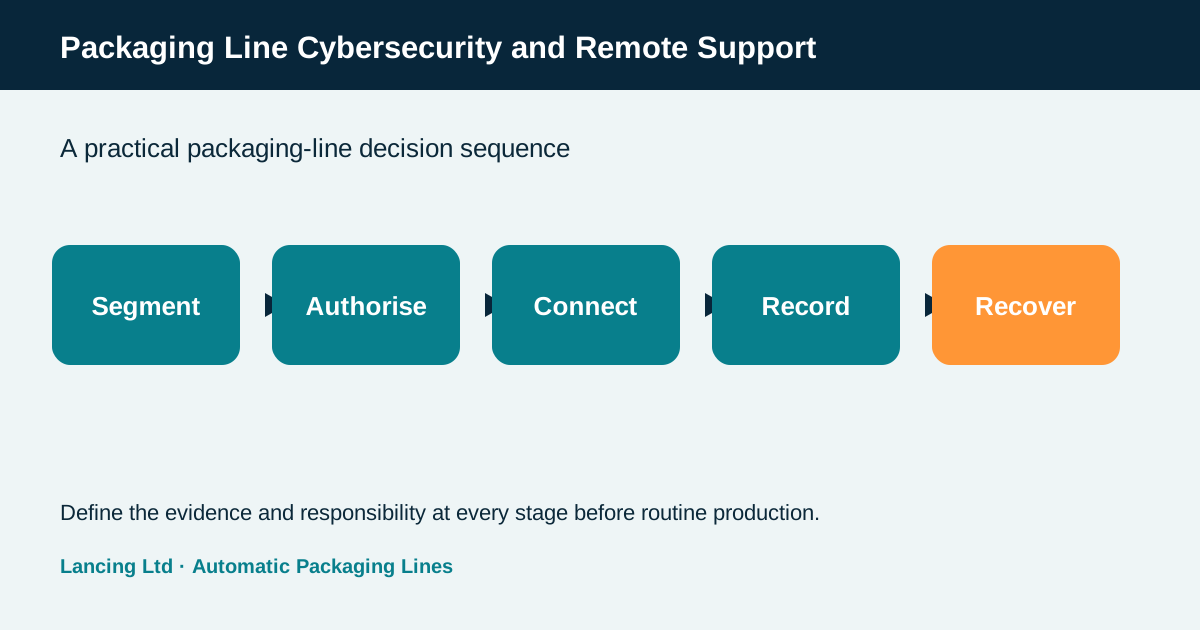
What is the cybersecurity scope of a connected packaging line?
The cybersecurity scope includes every route by which the line controller, industrial computer, vision system, printer, data interface or support device can exchange data or receive commands. It should cover local networks, remote-support gateways, portable media, maintenance laptops, cloud-connected services and the responsibilities of both the machinery supplier and the site operator.
- List every device, network interface and external service in the delivered system.
- Identify which interfaces are required for production and which are optional support functions.
- Assign ownership for accounts, network rules, updates, backups and incident response.
- Record the approved configuration as part of the handover information.
How should remote support access be controlled?
Remote support should be disabled or unavailable by default unless the project requires it, then enabled through an approved route for a defined purpose and period. Named accounts, strong authentication, customer authorisation and activity logging make access attributable. Shared permanent credentials and uncontrolled direct exposure of control devices should be avoided.
- Use a customer-approved connection method rather than an undocumented route.
- Provide the minimum permissions needed for the support task.
- Remove or disable temporary access when the task is complete.
- Keep an auditable record of connection time, user and work performed where required.
Should the packaging line be separated from the business network?
Production equipment should have a deliberate network architecture rather than being connected to a general business network by convenience. The appropriate segmentation, firewall rules and data flows depend on the site risk assessment and IT or operational-technology policy. Only required communications should be permitted, with documented ownership for any route between zones.
- Define the line network boundary and required data destinations.
- List permitted ports, protocols and direction of communication.
- Separate support access from normal production data exchange where practical.
- Review the design with the customer's IT and operational-technology stakeholders.
What backups are required for packaging-line recovery?
Recovery depends on more than a controller programme backup. The project should identify PLC and HMI applications, recipes, drive parameters, vision jobs, printer configurations, industrial-computer images, licences and network settings. A backup is only useful when its version, storage location, access rights and restore method are known and periodically verified.
- Create a controlled asset and software inventory.
- Store approved backups outside the machine and protect them from unauthorised change.
- Record compatible software versions, licences and restore dependencies.
- Include a practical restore or replacement check in lifecycle planning.
How should software changes be governed?
Software changes should follow a controlled request, review, backup, implementation, test and release sequence. The scale of the process should match the risk, but every change should have a clear reason, responsible person, affected version and evidence that critical functions still behave as intended. Emergency changes need retrospective documentation rather than becoming an undocumented permanent state.
- Back up the accepted version before modification.
- Define the expected behaviour and test boundaries before work starts.
- Record changed files, parameters, recipes and device versions.
- Update the handover set when the released configuration changes.
What should be agreed before enabling remote support?
Before remote support is enabled, agree the connection method, customer approval process, permitted users, authentication, access window, logging, software-change authority, safety boundaries and the procedure for disconnecting or disabling access. Remote work must not replace the site controls needed to prevent unsafe machine movement or unauthorised production changes.
- Site IT and operational-technology requirements.
- Named supplier and customer contacts.
- Approval, connection and disconnection procedure.
- Backup, rollback, testing and evidence requirements.